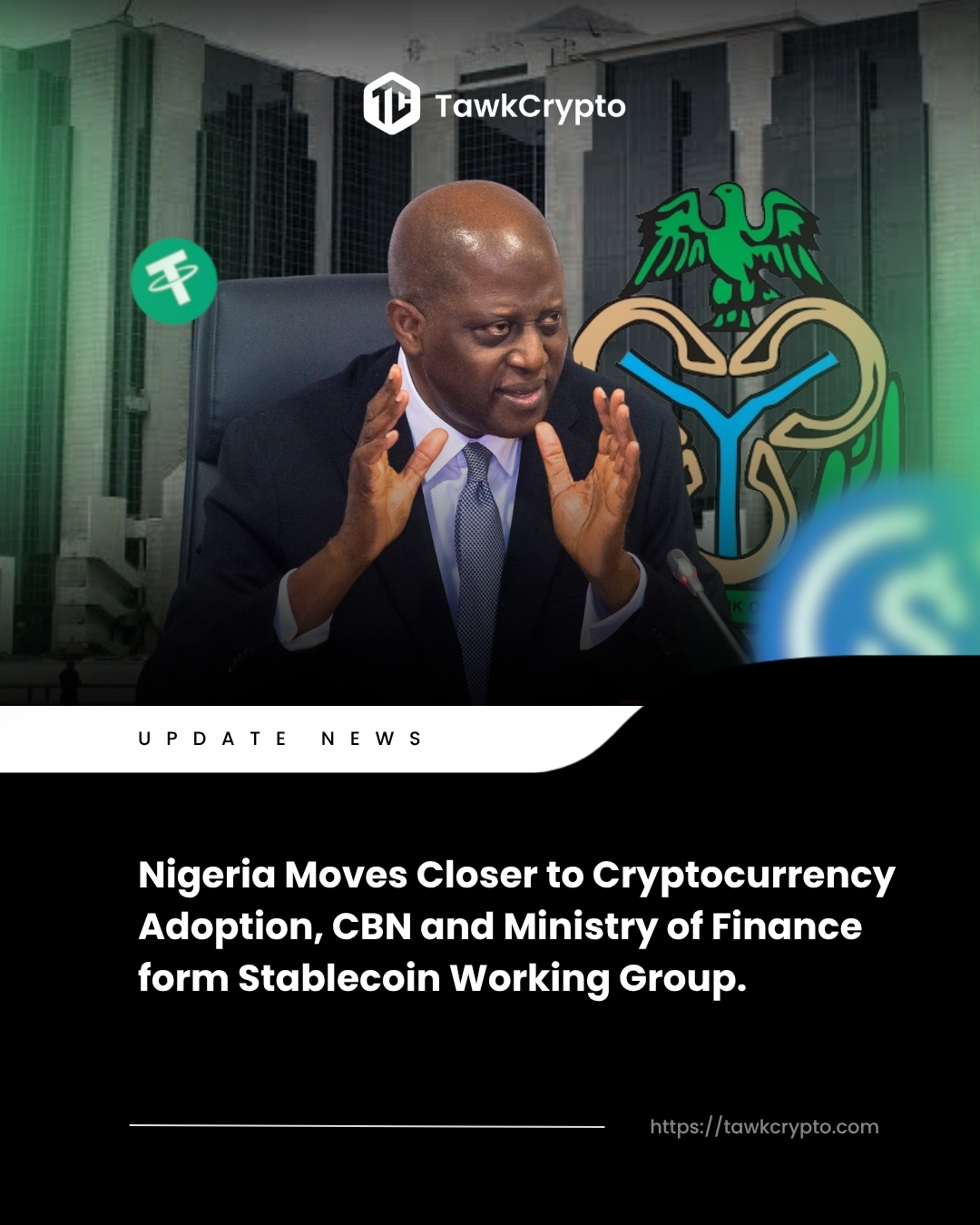
Nigeria has launched a working group to study stablecoins, exploring their possible adoption and economic consequences. This initiative aligns with the country’s ongoing efforts to support financial innovations while balancing the risks associated with emerging technologies.
The announcement was made by the Governor of the Central Bank of Nigeria, Olayemi Cardoso, during a joint press briefing following the annual meetings of the World Bank and the International Monetary Fund (IMF) held in Washington, DC.

“The message from there is that the Central Bank Governor, the Ministry of Finance, and others reached a general consensus on the need to support innovation and ensure it continues. By no means does anybody want to stifle innovation. However, there is also a need to balance this with the risks involved in these new technologies and digital currencies,”
— Olayemi Cardoso, CBN Governor
Cardoso noted that stablecoins were one of the dominant topics discussed during the meeting. Acknowledging the potential of stablecoins, he stated that the CBN, Ministry of Finance, and other relevant institutions had established working groups to analyse the impacts and economic implications of stablecoin adoption and to develop an appropriate regulatory framework for their use in Nigeria.
He added that, beyond policy measures ,other efforts have been made towards stablecoin adoption, including building partnerships with key stakeholders, driving financial innovation, and inclusion. He also emphasized the crucial role of non-bank actors such as digital lenders and micro-finance banks in enhancing the country’s financial technology landscape.
In addition to comments on stablecoin adoption initiatives, the CBN governor gave remarks on Nigeria’s macroeconomic performance, noting a decline in the inflation rate, improved foreign exchange transparency, and the country’s foreign reserves, which now exceed $43 billion.
Nigeria’s Progress Towards Stablecoin Adoption
The Official Launch of cNGN
Nigeria has taken proactive steps to pave the way for stablecoin acceptance and usage. Earlier actions have laid the foundation for widespread stablecoin adoption.
Nigeria’s stablecoin, cNGN officially launched on February 3, 2025, making it the first Africa regulated stablecoin.
It was initially introduced in 2024 by Africa Stablecoin community (ASC), a coalition of Nigeria financial institutions and blockchain companies. The stablecoin underwent the Securities and Exchange Commission’s (SEC) Accelerated Regulatory Incubation Program (ARIP) before receiving full regulatory approval to commence operations.
cNGN is available across multiple platforms, including Assetchain, Binance, Base, Ethereum, Polygon, Tron, and Bantu, which serves as the primary issuer of the cryptocurrency
As of October 21, 2025, over 603 million cNGN are in circulation with more than 1,300 wallet addresses, according to the project’s official website.
SEC Endorses Stablecoin Businesses
In July, the Securities and Exchange Commission (SEC) stated that stablecoin businesses are welcome in the country, provided that local regulations are complied with.
Speaking at the Nigeria Stablecoins Summit, SEC’s Director-General, John Agama, stated:
“We have onboarded some firms focused on stablecoin applications, all while ensuring compliance with core risk management principles.”
The adoption of stablecoin in Nigeria could significantly transform the economy, enabling efficient and borderless transactions, enhanced financial inclusion, and innovation within the financial technology sector. A report by African crypto exchange, Yellow Card, revealed that 43% of stablecoin transactions in 2024 came from Sub-Saharan Africa, with Nigeria taking the lead with over 22% of the total transactions. This highlights the vast and thriving stablecoin market in Nigeria, emphasizing its vast potential for stablecoin adoption.
However, the adoption of stablecoin without effective regulatory oversight could facilitate illicit financial activities or market manipulation, posing threats to economic stability and national security.