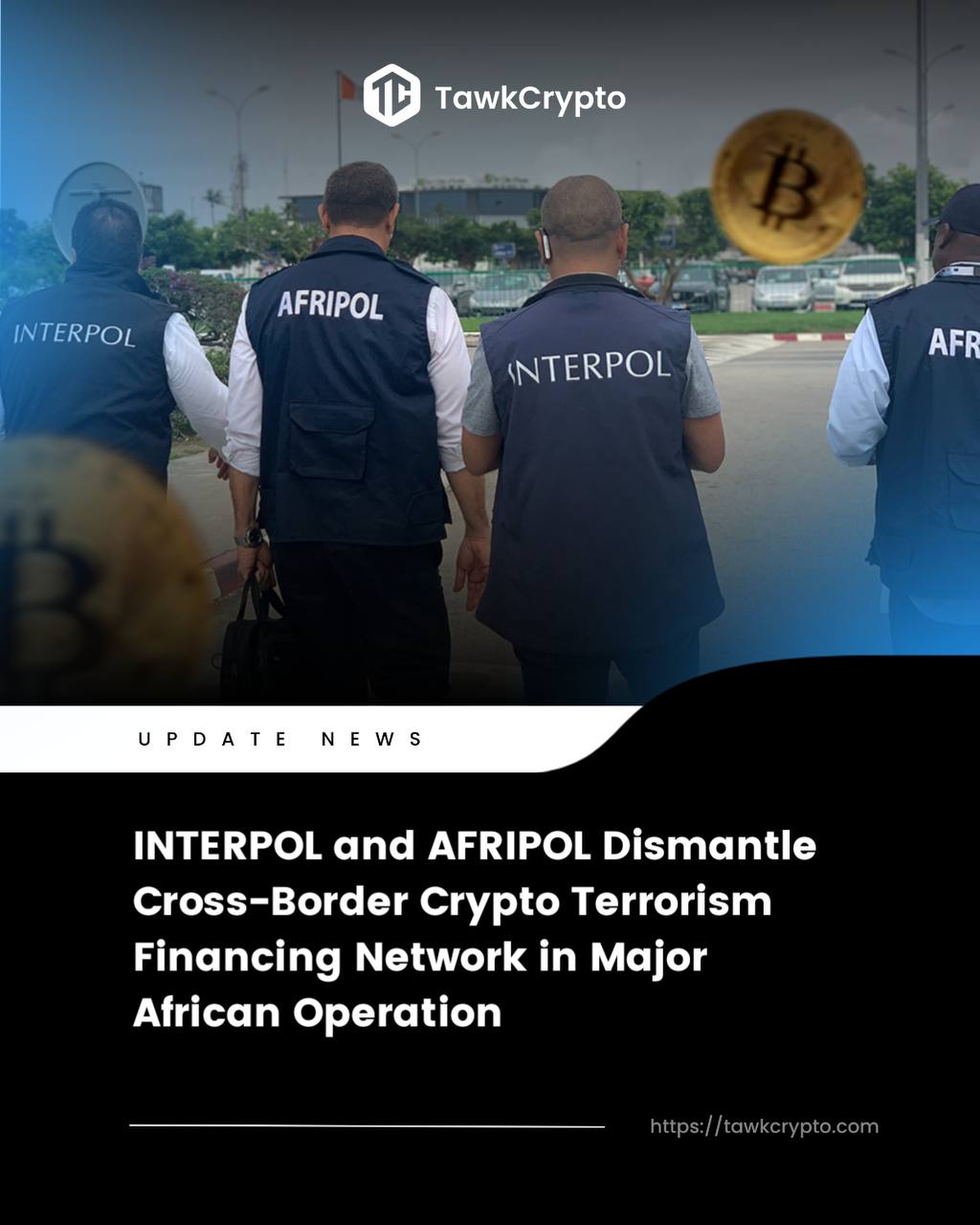
In one of Africa’s most extensive coordinated law enforcement initiatives to date, INTERPOL and the African Union’s police cooperation mechanism, AFRIPOL, have successfully dismantled a sophisticated cryptocurrency-based terrorism financing network spanning multiple African countries, resulting in 83 arrests and the seizure of significant illicit funds.
Operation Catalyst, conducted between July and September 2025, targeted criminal enterprises utilizing digital assets to fund terrorist activities, cybercrime operations, and money laundering schemes across Angola, Cameroon, Kenya, Namibia, Nigeria, and South Sudan.
Operation Scale and Methodology
The two-month continental operation represented unprecedented cooperation among African law enforcement agencies, screening more than 15,000 individuals and entities suspected of involvement in illicit financial activities. Investigators identified 160 persons of interest and successfully traced approximately $260 million in illegal funds flowing through various financial channels, including cryptocurrency networks.
Authorities seized $600,000 in assets during the operation, confiscating multiple bank accounts, electronic devices, financial records, and cryptocurrency-related evidence. The comprehensive approach combined traditional financial investigation techniques with cutting-edge blockchain intelligence capabilities provided by strategic partners.
Kenya: Cryptocurrency Terrorism Financing Exposed
The operation’s most significant cryptocurrency-related breakthrough occurred in Kenya, where investigators uncovered a virtual asset laundering operation valued at approximately $430,000 allegedly connected to terrorism financing activities.
According to law enforcement authorities, the suspects utilized a virtual asset service provider to facilitate illicit transactions, with funds ultimately traced to a cryptocurrency trading platform. The investigation revealed cross-border connections, with funding sources identified in Tanzania leading to multiple arrests across the region.
In a separate but related Kenyan case, investigators apprehended two suspects accused of recruiting youth into terrorist networks through online channels. These individuals allegedly funneled operational funds through cryptocurrency trading platforms, exploiting the pseudo-anonymous nature of digital asset transactions to obscure the money trail.
The Kenya cases highlight an evolving pattern where terrorist organizations increasingly leverage cryptocurrency infrastructure to circumvent traditional financial monitoring systems. The dual nature of these schemes, combining online radicalization with crypto-based funding mechanisms, represents a sophisticated approach to organizational financing that challenges conventional counter-terrorism strategies.
Kenya’s appearance in these cryptocurrency-related terrorism financing cases carries additional significance given the European Commission’s earlier designation of the country as high-risk for money laundering and terrorism financing. The nation now appears on the EU watchlist alongside nine other countries globally, a classification that has intensified scrutiny of its financial systems and cryptocurrency ecosystem.
Regional Operation Breakdown
Angola: Largest National Haul
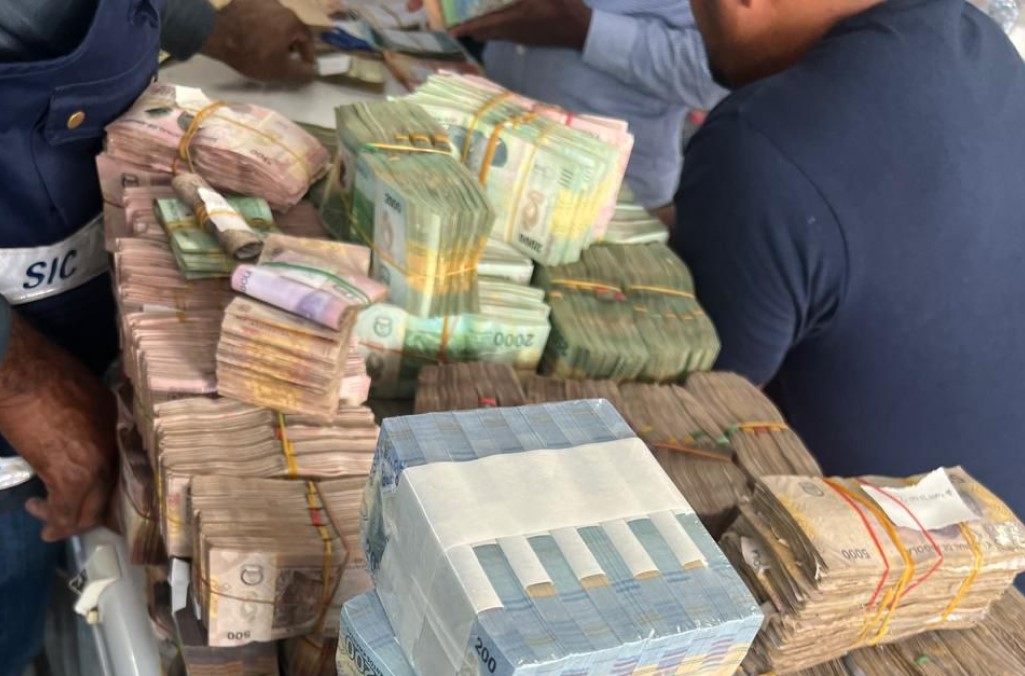
Angolan authorities achieved the operation’s most substantial single-country results, arresting 25 individuals while seizing $588,000 in assets. Law enforcement froze 60 bank accounts linked to suspected criminal activities and confiscated 100 mobile phones plus 40 computers containing evidence of financial crimes. The Angolan component of Operation Catalyst builds on previous INTERPOL-coordinated actions in the country, including earlier crackdowns on illegal cryptocurrency mining operations.
Nigeria: High-Value Terrorist Operatives Detained
Nigerian security forces detained 11 suspected terrorists during the operation, including several high-level operatives within terrorist organizational structures. Nigeria’s strategic importance in the operation stems from its position as both Africa’s largest cryptocurrency market and a nation facing persistent terrorism challenges, particularly in northern regions where extremist groups maintain operational presence.
Cameroon, Namibia, and South Sudan: Cross-Border Network Disruption
Additional arrests across Cameroon, Namibia, and South Sudan targeted cross-border financing mechanisms and illegal value transfer systems that facilitated terrorism funding across national boundaries. These cases demonstrated how criminal networks exploit Africa’s porous borders and varying regulatory frameworks to move illicit funds regionally while evading detection.
Strategic Partnerships and Technical Capabilities
Operation Catalyst’s success depended significantly on technical expertise and intelligence provided by private-sector partners specializing in blockchain analysis and financial crime detection.
Binance, the world’s largest cryptocurrency exchange by trading volume, contributed blockchain intelligence capabilities enabling investigators to trace digital asset movements across multiple platforms and jurisdictions. The exchange’s cooperation reflects growing collaboration between cryptocurrency industry leaders and law enforcement agencies addressing illicit use of digital assets.
Moody’s Analytics provided sophisticated risk assessment tools and financial crime detection systems that helped investigators identify suspicious transaction patterns and potential terrorist financing indicators across traditional and digital financial channels.
Uppsala Security supplied additional blockchain intelligence and cybersecurity expertise, contributing to the operation’s technical capacity to analyze complex cryptocurrency transaction flows and identify connections between seemingly unrelated wallets and accounts.
Germany’s ISPA (International Security and Stabilization Programme) funded the operation, demonstrating international commitment to supporting African counter-terrorism capabilities and financial crime enforcement infrastructure.
The operation executed under AFRIPOL’s mandate to enhance regional cooperation against organized crime and terrorism financing, representing the pan-African law enforcement body’s most significant cryptocurrency-related enforcement action to date.
Official Response and Strategic Implications
INTERPOL Secretary General Valdecy Urquiza emphasized the critical importance of international cooperation in combating terrorism financing through cryptocurrency channels.
“By sharing intelligence and resources, we can more effectively disrupt the financial flows that support terrorist activities,”
Urquiza stated, highlighting how coordinated action enables law enforcement to overcome the jurisdictional challenges posed by cryptocurrency’s borderless nature.
Ambassador Jalel Chelba, AFRIPOL Executive Director, framed the operation as validation of African-led security cooperation mechanisms.
“This operation demonstrates the power of coordinated African action in dismantling terrorism-linked financial networks,”
Chelba declared, positioning the initiative as evidence that continental institutions can effectively address sophisticated transnational threats when provided with adequate resources and political support.
Historical Context: Evolution of Crypto Crime Enforcement in Africa
Operation Catalyst represents the culmination of increasingly sophisticated African law enforcement approaches to cryptocurrency-related crime.
Previous INTERPOL operations in Africa have targeted various cryptocurrency-adjacent criminal activities, including illegal mining operations in Angola and cybercrime networks across multiple countries. However, Operation Catalyst marks the first major pan-African enforcement action specifically addressing cryptocurrency’s role in terrorism financing networks.
The Kenya cases carry particular resonance given the country’s complex cryptocurrency history. In 2025, Kenyan digital asset adoption surged during political protests, with activists utilizing peer-to-peer USDT (Tether stablecoin) trading to fund demonstrations and circumvent traditional financial monitoring. While that movement represented legitimate political activity, it demonstrated cryptocurrency’s capacity to enable financial flows outside conventional oversight, a capability that terrorist organizations subsequently sought to exploit.
Kenya has also experienced cryptocurrency-related banking system breaches, including a sophisticated 2025 incident where criminals stole over 500 million Kenyan Shillings (approximately $4 million) through an IT system compromise involving USDT stablecoin laundering. These incidents highlight systemic vulnerabilities that terrorist financing networks potentially exploit.
Conclusion: A Watershed Moment for African Crypto Security
Operation Catalyst represents a watershed moment in African cryptocurrency enforcement, demonstrating both the concerning exploitation of digital assets by terrorist networks and the growing capacity of African law enforcement institutions to combat these threats through coordinated action.
The $430,000 cryptocurrency terrorism financing case in Kenya, along with arrests across six nations and seizure of $600,000 in illicit assets, signals that African authorities are developing sophisticated capabilities to investigate and disrupt cryptocurrency-based criminal financing networks.
However, the operation also exposes the scale of challenges ahead. With $260 million in illicit funds traced but only $600,000 seized, significant criminal cryptocurrency infrastructure clearly remains operational. The 15,000 individuals and entities screened, yielding 160 persons of interest and 83 arrests, suggests that terrorism financing networks utilizing cryptocurrency extend far beyond those currently apprehended.
As Africa’s cryptocurrency ecosystem continues its rapid expansion, the continent faces a defining question: Can regulatory frameworks, enforcement capabilities, and industry practices evolve quickly enough to address security threats while preserving digital assets’ legitimate benefits for financial inclusion, economic development, and regional integration?
Operation Catalyst demonstrates that African institutions, supported by international partners and private-sector expertise, possess capacity to disrupt cryptocurrency terrorism financing networks. Whether this capacity can scale to match the challenge remains the critical question shaping Africa’s cryptocurrency future.