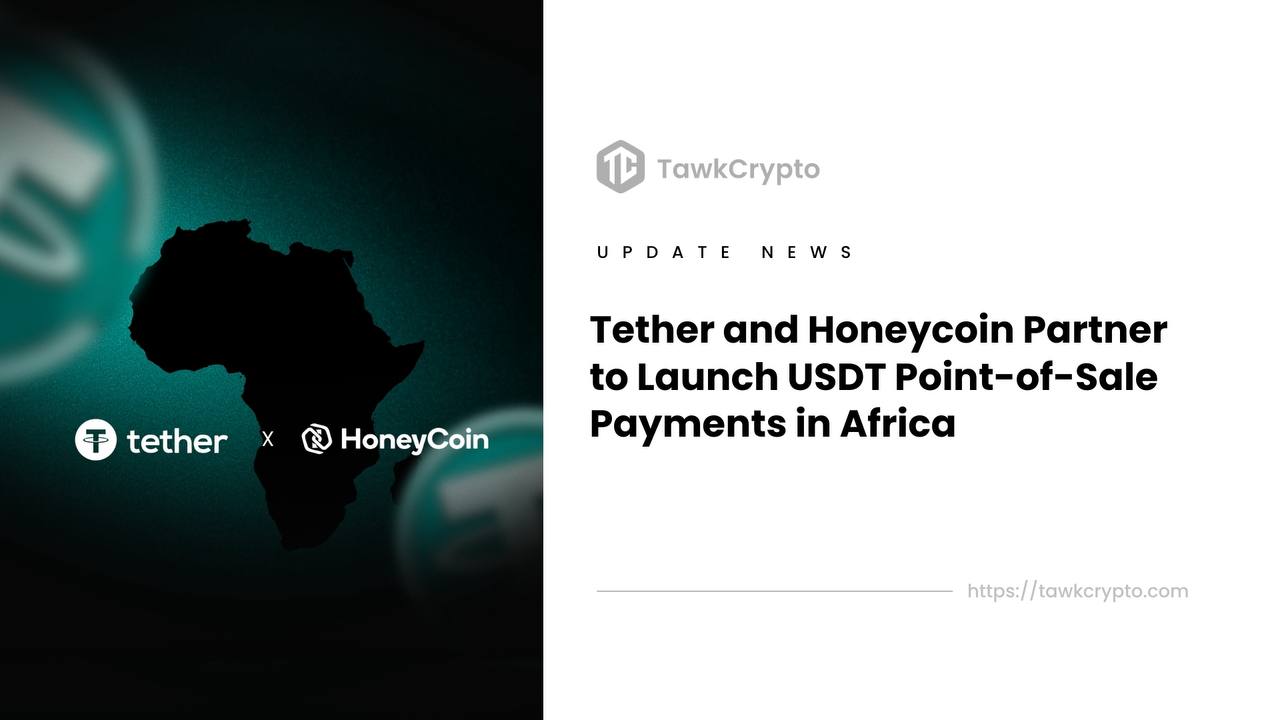
Global stablecoin leader Tether has announced a strategic partnership with Honeycoin, a Kenyan fintech, to expand access to digital assets across Africa.
The partnership seeks to address Africa’s long-standing financial challenges, including high remittance costs and slow settlements, by leveraging Honeycoin’s infrastructure for cost-efficient transactions and blockchain technology.
Targeting Africa’s Financial Bottlenecks
Africa remittances and commercial payments are often characterized by high fees, inflation, and currency depreciation. Merchants and small businesses struggle with slow and costly settlements, prompting many to explore alternative financial instruments and systems like stablecoins.
Stablecoins have already gained acceptance across the continent, with Nigeria, Kenya, and South Africa consistently ranking among the highest adopters globally.
In the statement released by Tether, Paolo Ardoino, CEO of Tether, noted the role of digital assets in addressing these challenges.
With the rapidly growing digital assets ecosystem in Sub-Saharan Africa, it’s clear that more people are gravitating toward alternative financial solutions to facilitate seamless cross-border transactions and access to foreign currency without the complexities of owning or maintaining a foreign bank account. Our mission is to ensure true financial inclusion for everyone. We want individuals anywhere to participate freely in the global digital economy without restrictions, and we are excited to work with innovative companies like HoneyCoin to make this a reality.

USDT-supported Point-of-Sale (POS) Platform
At the core of this partnership is the introduction of a point-of-sale (POS) platform supported by USDT payments. The initiative will enable African merchants to accept USDT directly as payment during checkout. The rollout will begin in Kenya before expanding to other countries in Sub-Saharan Africa.
This initiative also directly addresses Africa’s inefficient trading system, as it specifically targets business owners, ensuring that these key stakeholders have access to a cost-efficient and rapid settlement alternative.
According to the CEO of Honeycoin, David Makuku, the collaboration with Tether is a turning point for the future of payments in Africa
“Our work at HoneyCoin centers on solving two fundamental challenges: making sure businesses can accept every form of payment their customers want to use and providing them with sophisticated tools to strengthen and scale their financial operations,” said David Makuku Nandwa.
We’re bringing the same simplicity that mobile money offers to stablecoin acceptance, while giving African entrepreneurs access to the currency stability and global connectivity that digital dollars enable.
USDT in Everyday Payments for Africa.
The partnership also involves integrating USDT into African business ecosystems as a standard method of settlement and everyday payment through Honeycoin’s local expertise and reputation. This is aimed at enabling merchants to access stablecoins for both in-person and online transactions.
The collaboration would also include the development of a robust infrastructure featuring real-time conversion from Kenyan Shillings (KES) to USDT, QR code payments, and a merchant’s dashboard.
Tether Expands Presence in Africa
The global stablecoin giant has built a prominent presence in the African digital asset ecosystem.
It has demonstrated its commitment to supporting financial access and inclusion in Africa through numerous projects and initiatives, the most recent being the partnership with Kotani Pay to enhance cross-border settlements through stablecoins. The company also invested in Shiga Digital to strengthen Africa’s on-chain ecosystem.
Beyond private partnerships, Tether has also signed MOUs with the Zanzibar eGovernment Authority and other institutions to promote blockchain education and digital asset adoption.
Looking Ahead
This partnership represents another step toward addressing the unique challenges of Africa’s trade sector through a hybrid approach that combines traditional finance solutions with blockchain technology.
However, its long-term success and impact will depend on some factors, including transaction capacity, merchant onboarding experience, and regulatory clarity. Moreover, most African jurisdictions have yet to issue formal guidance on stablecoin use in everyday payments, leaving room for potential conflict and regulatory ambiguity.
Nonetheless, the partnership could potentially transform African businesses by reducing transaction costs and streamlining operations.