Nigerian cryptocurrency exchange Obiex is embarking on an ambitious regional expansion into Ghana and South Africa, riding the momentum of surpassing $1 billion in annual swap transactions. The move signals a significant shift for the bootstrapped platform as it transforms from a Nigeria-focused service into a pan-African digital asset infrastructure provider.
The expansion comes at a pivotal moment for African crypto markets, where regulatory frameworks are evolving and retail adoption continues climbing despite global market volatility.

From Payment Gateway to Conversion Powerhouse
Obiex’s journey began in 2016 under a different name and vision. Initially launched as Paylot, a cryptocurrency payment gateway designed to help merchants accept digital currencies, the company quickly discovered that African users had different priorities than originally anticipated.
“We realized people weren’t interested in paying for goods with crypto,” explains the company’s approach to product-market fit. “What they really wanted was a reliable way to convert their digital assets into local currency quickly and efficiently.”
This user insight triggered a complete strategic pivot. The company rebranded to Obiex and shifted its entire focus toward providing seamless liquidity and fast off-ramp services, essentially becoming a bridge between the crypto economy and traditional African banking systems.
Navigating Nigeria’s Regulatory Crackdown
The platform faced its biggest test in 2021 when Nigeria’s Central Bank implemented strict restrictions preventing banks from servicing cryptocurrency businesses. Rather than retreat, Obiex identified a critical pain point affecting peer-to-peer traders during this turbulent period.
High-volume P2P traders were losing significant amounts due to price volatility while waiting for blockchain transaction confirmations. Even a few minutes could mean the difference between profit and loss when markets moved quickly.
Obiex’s solution was elegant: a rate-locking mechanism that allows users to secure their exchange rate instantly, eliminating exposure to price fluctuations during the confirmation window. This feature has since become one of the platform’s most valued offerings, particularly among professional traders and businesses dealing in substantial volumes.
Impressive Growth Without VC Backing
What makes Obiex’s trajectory particularly noteworthy is its complete independence from venture capital funding. In an industry where billion-dollar valuations often precede sustainable revenue models, Obiex has built profitability through transaction spreads rather than traditional fees.
The numbers tell a compelling growth story. Annual swap volume jumped from $588 million in 2024 to cross the $1 billion threshold in 2025, a 70% year-over-year increase. Total gross transaction value reached $9 billion last year alone, pushing cumulative volume since the 2021 strategic refocus past $20 billion.
The platform’s user base shows healthy diversity. Retail customers drive the majority of trading activity, while business clients contribute over 25% of total volume. Perhaps most strikingly, active users averaged more than $200,000 in transactions throughout 2025, indicating deep engagement beyond casual trading.
Beyond consumer-facing operations, Obiex has also positioned itself as infrastructure for the broader Nigerian crypto ecosystem, providing white-label wallet and backend services to approximately twelve other local exchanges.
Building Pan-African Infrastructure
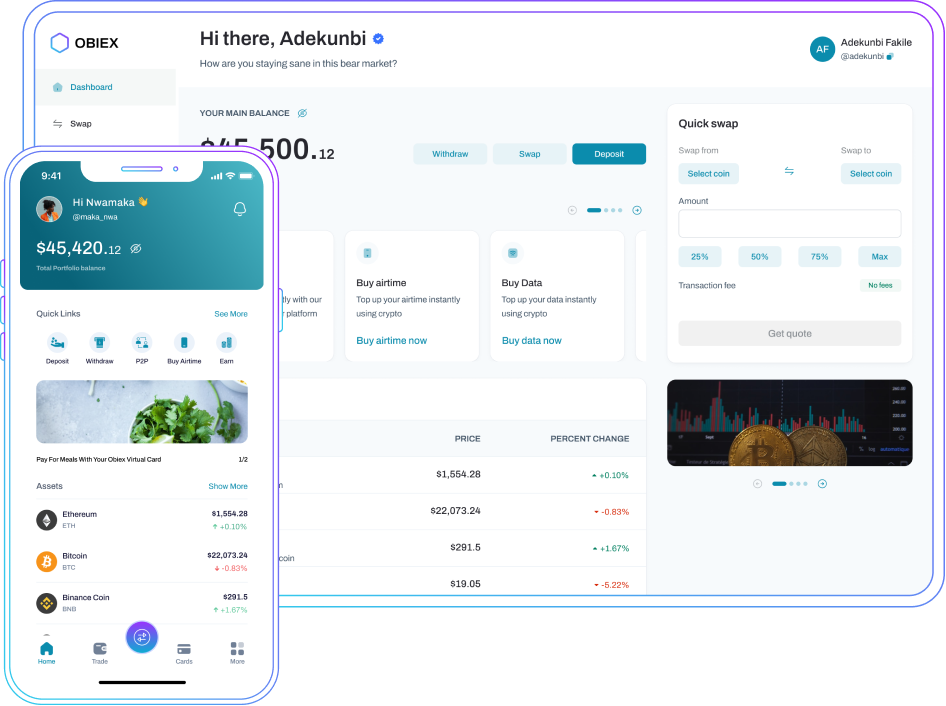
Obiex’s expansion strategy reflects broader trends in African fintech. Rather than competing directly with global exchanges like Binance or Coinbase, the platform is carving out a niche as the go-to solution for Africans seeking efficient local currency conversion.
The revenue model, earning through spreads on swap transactions rather than explicit fees, has proven sustainable enough to fuel expansion without external capital. This financial independence gives Obiex operational flexibility that VC-backed competitors often lack.
As regulatory frameworks continue developing across the continent, platforms with established compliance track records and local market understanding may find themselves better positioned than global players still navigating Africa’s diverse regulatory landscape.