In a statement released on Sunday, the Securities and Exchange Commission (SEC) reported that over $50 billion worth of cryptocurrency transactions were recorded in Nigeria between July 2023 and June 2024.
During the Chartered Institute of Stockbrokers’ annual conference in Lagos, the Director General of the Commission, Emotimi Agama, presented a paper titled “Evaluating the Nigerian Capital Market Masterplan 2015–2025,” where he highlighted the alarmingly low participation of Nigerians in the capital markets, compared to cryptocurrency markets.
He further disclosed that more than 60 million Nigerians engage in gambling activities daily, collectively spending over $5.5 million each day. This figure sharply contrasts with the number of Nigerians who participate in the capital market, which is barely above three million of the adult population.
He noted that the surge in participation in these activities reflects Nigerians’ strong desire to make money and their high-risk appetite. However, the inability to channel this interest into the Nigerian capital market poses a major impediment to economic growth.
“This reveals a paradox: an appetite for risk clearly exists, but not the trust or access to channel that energy into productive investment.”
The Director-General also made comparisons between Nigeria’s market capitalization-to-GDP ratio and other countries, noting that Nigeria stands at 30 percent, far below South Africa’s 320 percent, Malaysia’s 123 percent, and India’s 92 percent. This, he asserted, underscored the need to restore investor confidence and deepen financial inclusion within the country.
The Director-General called for a ‘reimagined SEC’ that served as both regulator and enabler of private-sector-driven growth by rebuilding public confidence and expanding financial access.
Still on the topic of widening participation in Nigeria’s capital markets, Agama referred to the Capital Market Master Plan (CMMP) 2015-2025, launched to transform the economy through deepening market participation and attracting long-term capital. He pointed out that fewer than half of the 108 initiatives under the plan have been fully executed.
“Vision without execution is inertia— and reform without measurement is aspiration without accountability,” he told market stakeholders.
He identified several factors hindering the realization of the reforms, including low retail participation, market concentration, falling foreign inflows, underutilised pension assets, untapped diaspora capital, and a widening infrastructure financing gap.
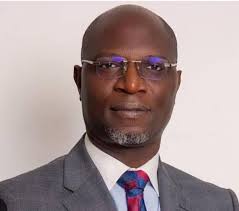
”Nigeria’s $150 billion annual infrastructure deficit far exceeds the market’s contribution, with only ₦1.5trillion approved in Public Private Partnership bonds. This shows a misalignment between financial innovation and national priorities. The capital market must be at the heart of financing roads, power, housing, and digital infrastructure,” he said.
Moreover, the Director-General acknowledged areas of progress, including the development of green bonds, Sukuk issuances, fintech integration, and the growth of non-interest finance products.
However, he noted that market liquidity remains concentrated in a few large-cap stocks such as Airtel Africa, Dangote Cement, and MTN Nigeria, making the market prone to shocks and discouraging new participants.
Reports have repeatedly shown that Nigeria ranks among the leading countries in cryptocurrency usage and trading volume, making it a continental leader in digital asset adoption. In recent times, both the SEC and the government have taken steps toward accepting and regulating cryptocurrency activities.
However, as the Director-General rightly noted, there is a need to diversify investments, especially into the capital markets, so that the money in circulation contributes meaningfully to the economy and national development.