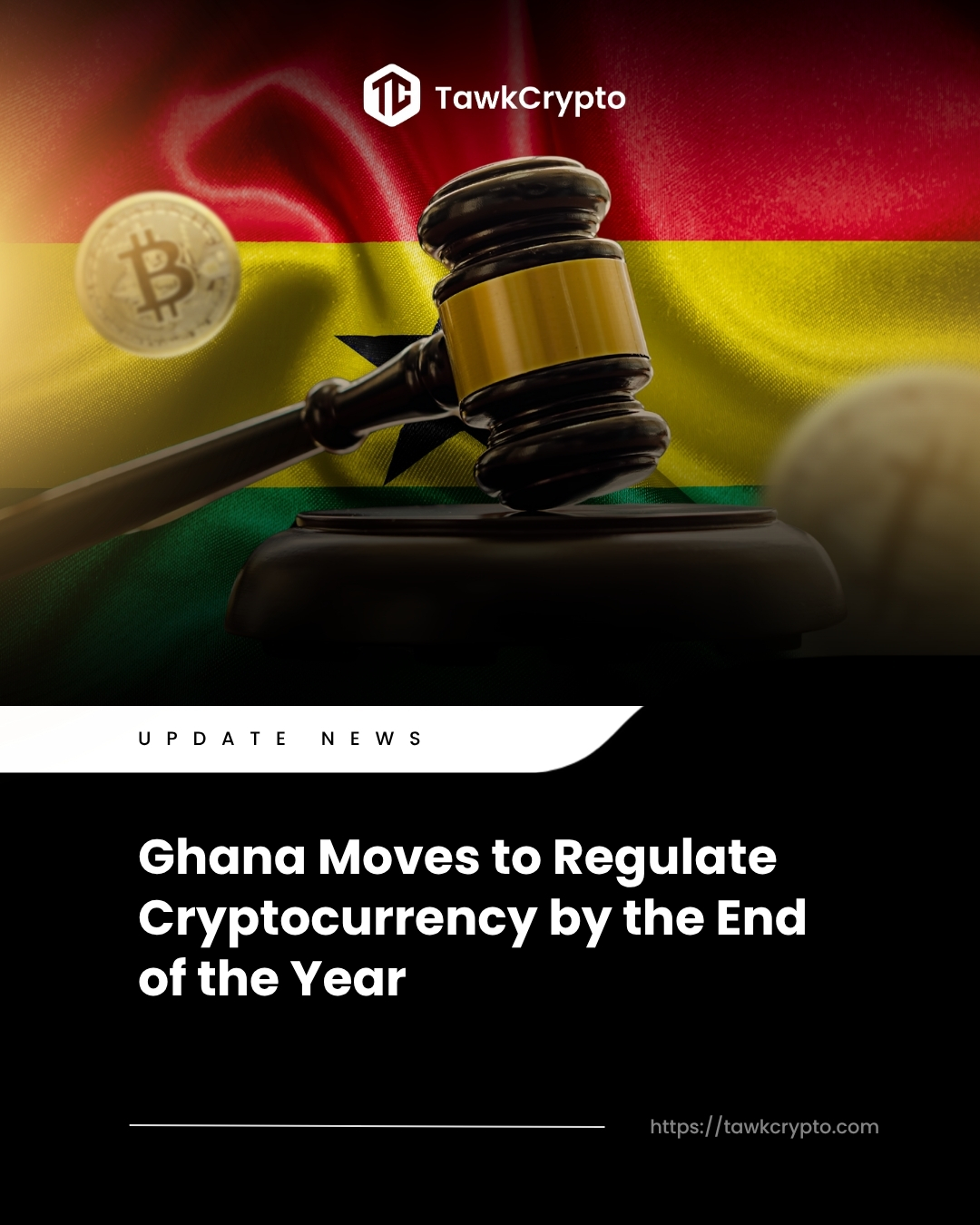
The Bank of Ghana is set to finalize its cryptocurrency legal framework by the end of December, signalling a significant step towards a clear regulatory oversight of the country’s rapidly evolving digital asset sector.
Earlier this month, the Bank confirmed the completion of its Virtual Asset Service Providers (VASP) bill, which will govern cryptocurrency and digital asset providers.
In a meeting with the International Monetary Fund on Thursday, Johnson Asiama, the governor of the Bank of Ghana (BoG) acknowledged the importance of cryptocurrency regulation for economic stability,
“It is an important area, and we have to step up to regulate and monitor these transactions,” He said, noting that efforts have been made to “put together the regulatory environment” since the last four months.
This marks the second time the central bank has set a deadline for cryptocurrency regulation. It had previously announced that a comprehensive Virtual Asset Service Provider (VASP) regulatory framework will be ready for presentation to the Parliament by September 2025. This time, however, has included additional statements, such as the development of specialized expertise and the creation of a dedicated department to oversee digital assets.
This step will position Ghana alongside other African Countries like South Africa, Nigeria, and Kenya, which have developed regulatory guidelines governing the use and exchange of crypto assets.
Ghana’s Legal Stance on Cryptocurrency
Ghana lacks clear regulatory guidelines on crypto assets, despite the growing number of citizens actively trading cryptocurrency, estimated to be around 3.4 million.
Over time, Ghana’s Regulatory stance on cryptocurrency has transitioned from non-acknowledgement and caution to acceptance and active regulatory efforts.
Precautionary stance
Initially, the Ghanaian authorities maintained a cold stance towards cryptocurrency trading, as seen in the Bank of Ghana’s notice in 2018 and subsequently in 2022 . The notices stated that the laws of Ghana do not regulate Bitcoin or other cryptocurrencies, warning banks and other platforms to refrain from processing crypto transactions.
Not a Legal Tender
Ghana’s Securities and Exchange Commission aligned with the stance of the central bank. The commission released a public notice in 2019, cautioning the public that crypto assets were not recognized as a currency or legal tender and that platforms offering or trading them were neither licensed nor regulated.
The turning point: Ghana’s journey towards regulation
A major policy change occurred in August 2022 when the Bank of Ghana issued draft guidelines on digital assets, marking its commitment towards balancing innovation and consumer protection.
The guidelines required that Virtual Assets Service Providers (VASPs) register and comply with anti-money-laundering (AML) and know-your-customer (KYC) standards, granting the BoG and SEC joint oversight responsibilities. Stakeholders were urged to submit feedback to help shape the country’s digital-asset framework.
In April 2025, the Bank of Ghana took a bold step and announced a September 2025 deadline for the enactment of a cryptocurrency regulation at the African Leaders and Partners Forum, hosted by the EBII Group on the sidelines of the IMF/World Bank Spring Meetings in Washington, D.C. According to the governor, the VASP regulation will empower the Bank to license and supervise the operations of Virtual Assets Service Providers.
In April 2025, the Bank of Ghana took a bold step and announced a September 2025 deadline for the enactment of a cryptocurrency regulation at the African Leaders and Partners Forum, hosted by the EBII Group on the sidelines of the IMF/World Bank Spring Meetings in Washington, D.C. According to the governor, the VASP regulation will empower the Bank to license and supervise the operations of Virtual Assets Service Providers.
By July, the bank released a notice directing all VASPs to register with the Bank before August 15th, 2025. The Bank of Ghana also announced its plans to license cryptocurrency platforms, noting the rising adoption and demand in the country. During an interview with Bloomberg in July, Johnson Asiama, the governor of the BoG, stated that Ghana is “actually late in the game”, adding that the absence of clear regulatory oversight “has implications for the local currency”.
As part of its efforts to regulate digital assets, the central bank established the Virtual Assets Regulatory Office (VARO) in August. The office operates as a body within the BoG and will collaborate with the SEC and the Financial Intelligence Centre to ensure that VASPs operate transparently and in compliance with regulations.
Although the deadline for September has been postponed,recent efforts, including the completion of the VASP bill, registration directive, and the establishment of VARO, signals that the December deadline is a possibility.
Ghana’s renewed stance towards regulatory clarity could lay a foundation for a broader digital economy that promotes innovation and financial inclusion without negating consumer protection.