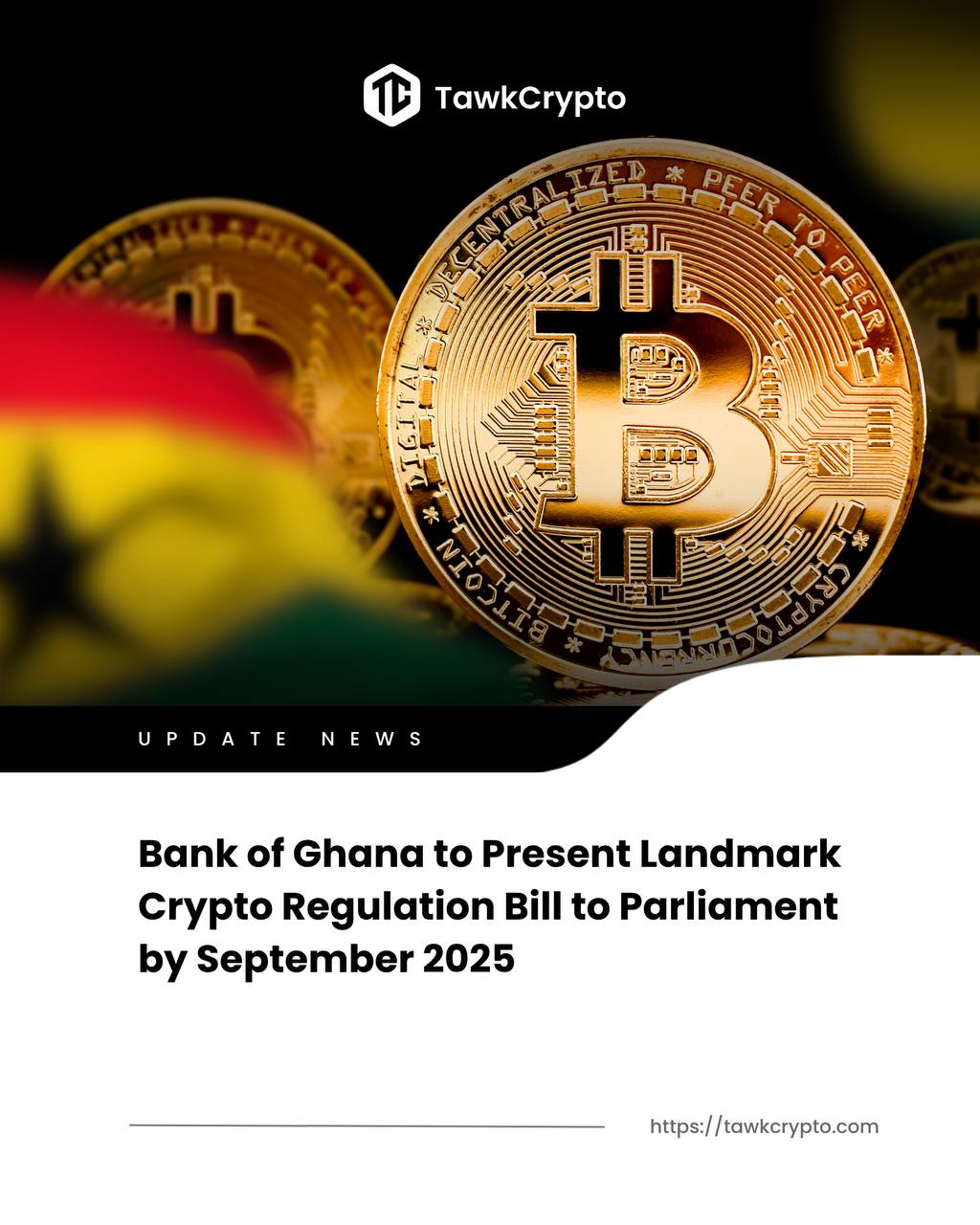
In a major leap toward formalizing the country’s fast-growing digital asset sector, the Bank of Ghana (BoG) has announced plans to present a comprehensive cryptocurrency and Virtual Asset Service Provider (VASP) regulatory framework to Parliament by September 2025. This is coming barely 3 months after they announced initial plan to regulate the sector claiming its a technology that cannot be ignored.
The landmark bill, tentatively titled the Virtual Asset Service Providers (VASP) Act, will establish clear legal parameters for crypto-related activities in Ghana.
This move represents a significant milestone in Ghana’s digital finance journey, as the nation seeks to strike a balance between innovation, consumer protection, and financial stability in the emerging crypto economy.
Regulatory Clarity for Crypto Exchanges, Wallets, and Token Projects
The proposed legislation will address key areas including:
- Licensing requirements for crypto exchanges, wallet providers, token issuers, and other virtual asset businesses
- Compliance and operational standards for registered firms
- Anti-Money Laundering (AML) and Know Your Customer (KYC) protocols
- Supervisory frameworks for ongoing monitoring and enforcement
In preparation for the new framework, the BoG has directed all VASPs operating within Ghana to register with the central bank by August 15, 2025. This interim measure aims to help regulators map the digital asset ecosystem, assess risks, and identify active players ahead of formal licensing.
Ghana’s Push for Transparent and Inclusive Digital Finance
With an estimated three million Ghanaians (17% of the adult population) actively engaged with crypto, the BoG’s initiative underscores the urgent need for regulatory clarity and investor protection. The central bank emphasized the importance of building a secure, transparent, and inclusive digital financial system that guards against the misuse of virtual assets for criminal activity.
The framework is also expected to enhance consumer confidence, reduce fraud, and promote financial inclusion by creating a trustworthy environment for digital asset adoption.
“This step is crucial in protecting our financial system from abuse while also ensuring that digital innovation thrives under responsible oversight,” a BoG spokesperson stated.
Positioning Ghana as a Fintech and Crypto Hub in West Africa
Beyond compliance, the legislation is part of a broader effort to position Ghana as a regional leader in fintech innovation. By providing a clear legal framework, the BoG hopes to:
- Attract institutional players and foreign investment
- Enable cross-border partnerships in the digital asset space
- Promote innovation among local startups and service providers
The upcoming bill will also align with global standards from bodies like the Financial Action Task Force (FATF) and the International Monetary Fund (IMF), ensuring that Ghana’s crypto sector can integrate seamlessly into the global financial system.
Regional Momentum and the Future of Digital Assets in Ghana
Ghana’s move reflects a wider regulatory shift across Africa, as countries like Nigeria, Kenya, and South Africa roll out similar oversight mechanisms for digital assets. This wave of regulation is being driven by increasing adoption, regulatory pressure, and the need to formalize previously unregulated markets.
Additionally, the BoG’s commitment to digital transformation is evident in its exploration of a Central Bank Digital Currency (CBDC), known as the e-cedi. Together, the CBDC initiative and the VASP Act illustrate Ghana’s strategic vision for a digitally resilient and forward-thinking financial ecosystem.
What Comes Next?
As the September deadline nears, public consultations and stakeholder engagements are expected to continue. The crypto community, both local and international, will be paying close attention to the drafting process, implementation timelines, and how the framework impacts innovation, business operations, and user participation.
If successful, Ghana’s regulatory blueprint could serve as a model for other African nations navigating the complexities of digital asset governance.
The Bank of Ghana’s move to introduce comprehensive cryptocurrency legislation marks a bold step forward in shaping the future of digital finance in the country. As policymakers, developers, and users prepare for this regulatory shift, Ghana is clearly positioning itself at the forefront of Africa’s crypto transformation.
Stay Updated
Subscribe to TawkCrypto’s Weekly Roundup to get the latest African crypto news, regulatory updates, and innovation stories delivered straight to your inbox.