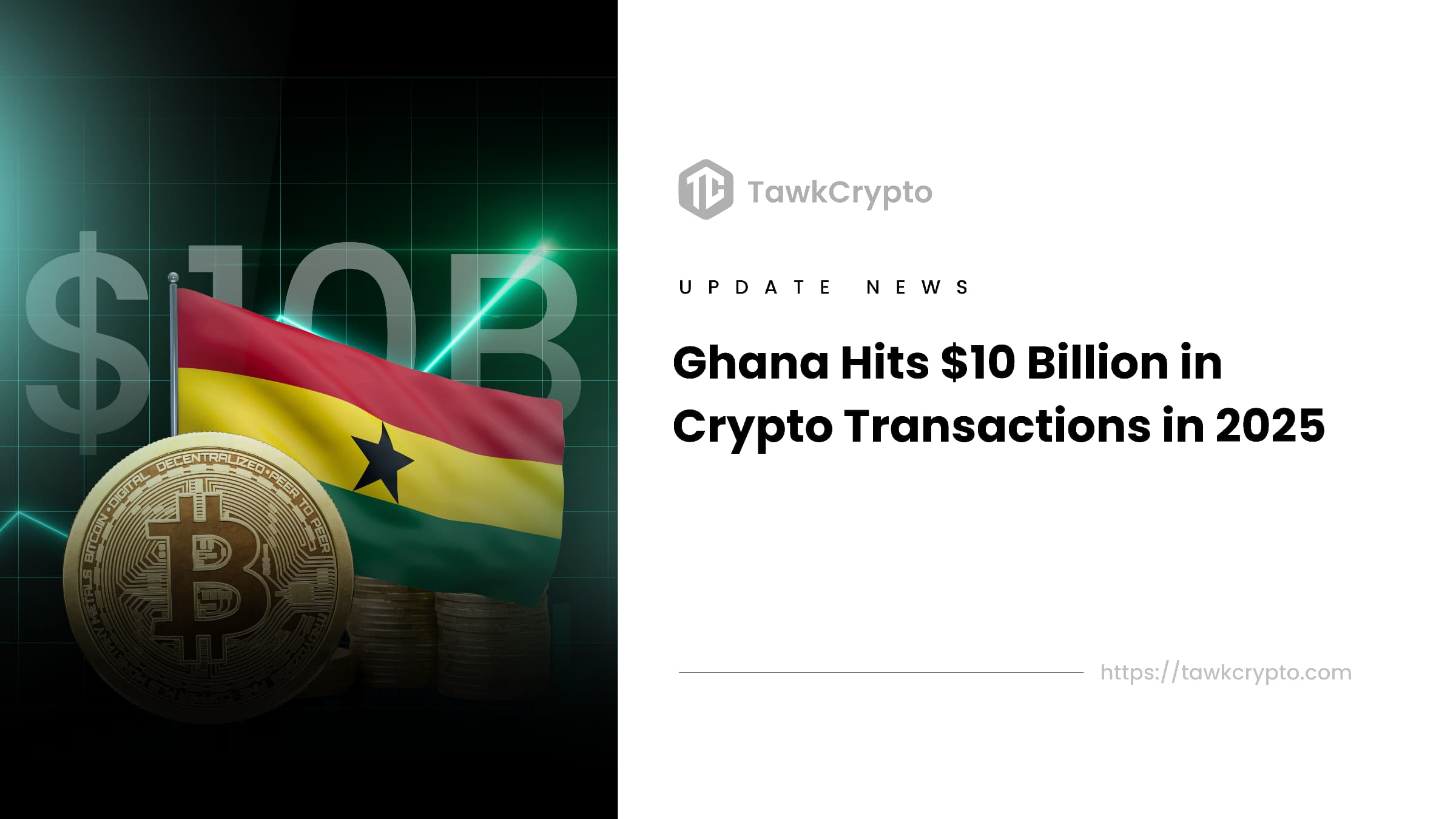
According to the Securities and Exchange Commission (SEC), Ghana has recorded over $10 billion worth of crypto transactions as of November 2025.
In an interview with local news outlet JoyNews on Tuesday, Mensah Thompson, Deputy Director-General of the SEC, said the transaction figure includes both inbound and outbound crypto flows.
He noted that Ghana has become significantly exposed to cryptocurrency, with the new figure representing an increase of almost 70% compared to the previous year, thereby requiring stronger government oversight.
Last year alone, about $6 billion worth of crypto transactions occurred. This year, as of November, we have crossed $10 billion. This is extremely significant and cannot be ignored.
He added that the growing adoption of cryptocurrencies among Ghanaians has prompted the government to pursue a balanced regulatory approach, rather than an outright ban.
The country is overexposed to crypto assets. Rather than banning them, the government, together with the Bank of Ghana, SEC, and other stakeholders, opted to regulate the space. This allows real-time visibility and ensures that digital assets are used properly.

Ghana’s Virtual Asset Service Provider (VASP) Act
Earlier this month, Ghana announced that it had successfully passed its Virtual Asset Service Provider (VASP) bill into law, enacting the country’s first comprehensive regulatory framework for virtual asset activity.
Over the past year, the SEC and the Bank of Ghana have released a series of statements and policy documents outlining the status of the bill and proposed regulatory guidelines. This demonstrates the government’s efforts to establish an effective regulatory oversight for virtual assets.
“We want to ensure that crypto activities in Ghana are done safely, transparently, and in a way that does not compromise financial stability,” Mensah noted.
The newly enacted law formally recognizes cryptocurrency as an acceptable means of transaction and settlement while mandating compulsory licensing for crypto asset service providers.
The Act also seeks to ensure financial stability and mitigate crypto-related crimes by requiring regular financial audits, as well as compliance with established anti-money laundering and counter-terrorism financing (AML/CFT) standards.
The Road Ahead of Ghana
Ghana is gradually positioning itself as an emerging key player within Africa’s crypto ecosystem, as it joins the small list of African countries that have enacted a virtual assets framework.
According to a recently released global crypto adoption report by Bybit and DL Research, Ghana ranks among the top 100 countries worldwide for cryptocurrency adoption.
With more than three million citizens trading crypto and a comprehensive regulatory framework in place, Ghana is set to actively compete with its peers in attracting crypto investors and becoming a hub for crypto activities in Africa within regulatory bounds.