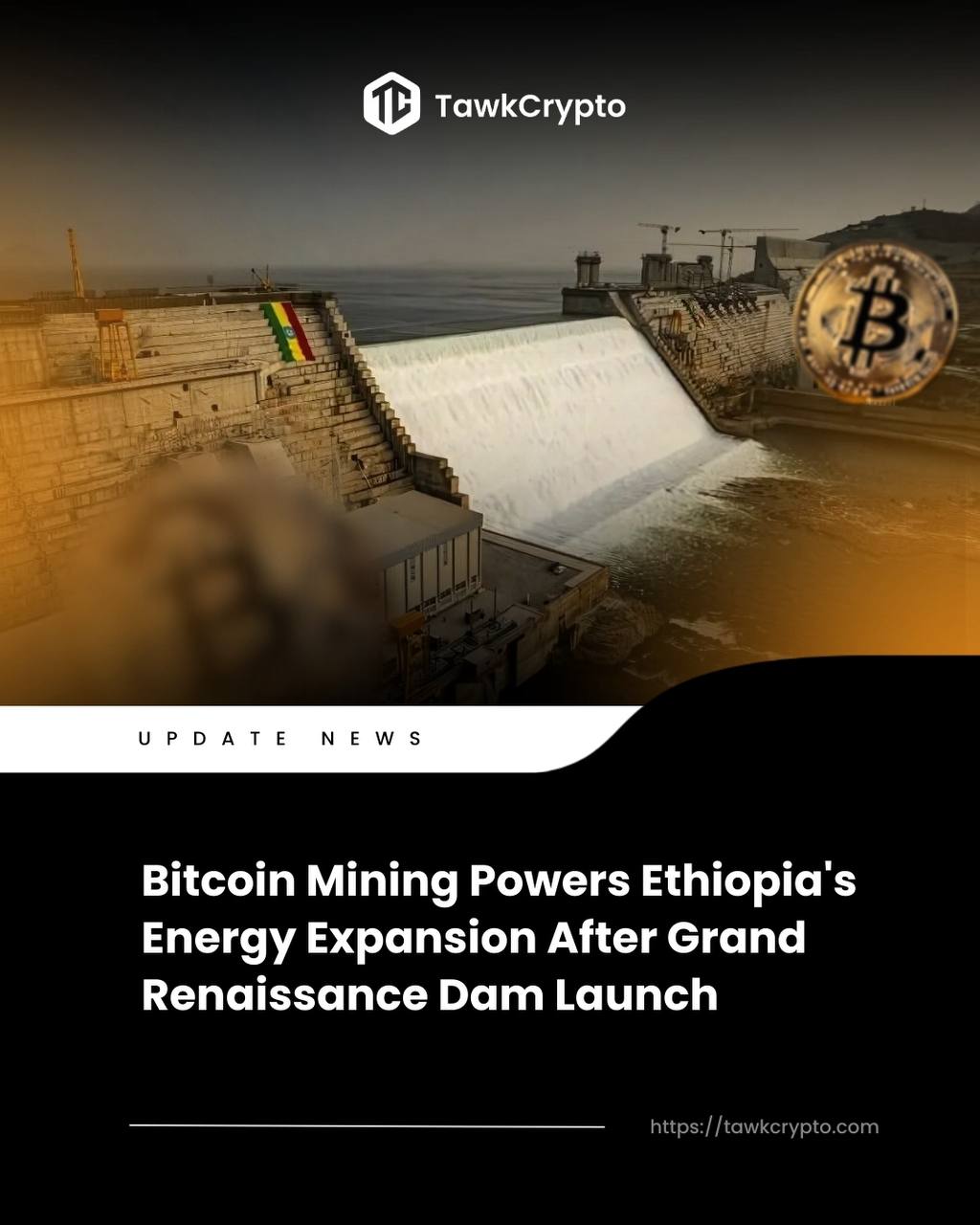
Ethiopia’s recently inaugurated Grand Ethiopian Renaissance Dam (GERD) has doubled the country’s electricity generation capacity, but with 55% of citizens still lacking power access, the government is strategically leveraging Bitcoin mining revenue to fund infrastructure expansion while selling excess energy at competitive rates.
Ethiopia made history on September 9, 2025, with the official inauguration of the Grand Ethiopian Renaissance Dam (GERD), Africa’s largest hydroelectric project. The $5 billion mega-project, which has been in development since 2011, represents a transformative moment for Ethiopia’s energy sector and its ambitious plans to become a regional power hub.
Key Takeaways:
- GERD doubles Ethiopia’s power generation capacity to 5,150 MW
- 55% of Ethiopians still lack electricity access due to infrastructure gaps
- Bitcoin mining generated $55 million in 10 months, representing 18% of EEP revenue
- Electricity sold to miners at 3.2 cents/kWh vs. 15 cents global average
- Government maintains mining is temporary solution until universal access achieved
- Recent permit freeze shows disciplined capacity management approach
GERD’s Massive Capacity Creates Strategic Opportunity
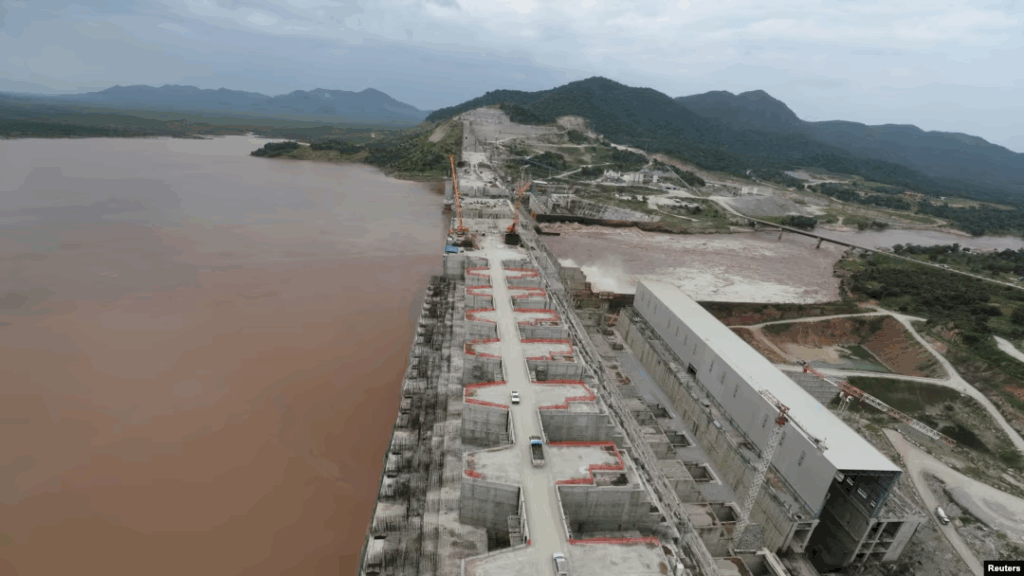
The GERD marks the beginning of a new era for the country, placing it at the heart of the continent’s green transition, with the dam designed to generate a maximum of 5,150 megawatts of electricity and deliver an estimated 15,000 gigawatt-hours of power annually. This massive increase effectively doubles Ethiopia’s power generation capacity, creating both opportunities and challenges for the East African nation.
However, the celebration comes with a sobering reality: just 55% of Ethiopia’s population currently has access to electricity at their homes, highlighting significant infrastructure gaps that prevent the country from delivering universal electricity access despite its newfound generation capacity.
Bitcoin Mining: A Strategic Revenue Bridge
To address this challenge, Ethiopia has embraced an unconventional solution that has generated significant returns. Ethiopia generated $55 million from Bitcoin mining over a 10-month period in 2024, primarily through agreements with 25 mining companies leveraging the country’s low-cost hydroelectric power from the Grand Ethiopian Renaissance Dam.
The strategy reflects a pragmatic approach to monetizing excess capacity while infrastructure development catches up with generation capabilities. According to reports, Bitcoin mining now generates 18% of Ethiopian Electric Power’s (EEP) income, turning idle energy into a profitable asset.
Ashebir Balcha, CEO of Ethiopian Electric Power, has been clear about the temporary nature of this arrangement, stating:
“Until the people have full access and the economy starts to consume all the power, we are using Bitcoin for transmission. It’s not a permanent endeavor.”

Competitive Pricing Attracts Global Miners
Ethiopia’s appeal to Bitcoin mining companies stems from its exceptionally competitive electricity rates. Ethiopia’s state-owned power producer welcomed the bitcoin mining industry in 2024 with an attractive electricity rate of USD 3.2 cents KWh, significantly below the global average of 15 cents per kilowatt-hour.
This pricing advantage has positioned Ethiopia as an attractive destination for international mining operations. The Ethiopian Electric Power (EEP) has committed 600 megawatts of electricity to support these operations, giving Ethiopia a notable 2.25% share of the global Bitcoin mining market.
Market Dynamics and Recent Developments
The rapid growth of Ethiopia’s Bitcoin mining sector has not gone unnoticed in previous TawkCrypto coverage. As we reported in our analysis of “Ethiopia’s Bitcoin Mining Boom Generates $55 Million for State Power Company,” the revenue windfall has been crucial for financing rural electrification projects, demonstrating how cryptocurrency mining can align with national development goals.
However, the sector’s explosive growth has led to capacity constraints. In August 2025, TawkCrypto reported that “Ethiopia Freezes New Crypto Mining Permits as Power Capacity Reaches Limit,” with the government suspending new electricity supply permits for data mining companies as existing allocations reached sustainable limits.
Balancing Development Priorities
The Ethiopian government maintains that Bitcoin mining serves local development priorities rather than competing with them. When questioned about whether Bitcoin miners receive preferential treatment over local industries, CEO Balcha emphasized:
“No way…Until the people have full access and the economy starts to consume all the power, we are using Bitcoin for transmission.”
Some stakeholders argue that the government must channel revenues from crypto miners into expanding access to the grid for the millions of Ethiopians still without electricity. This perspective underscores the critical need for transparent revenue allocation to ensure mining proceeds directly support infrastructure development.
Regional and Global Implications
Ethiopia’s approach contrasts sharply with many countries that have restricted Bitcoin mining due to environmental concerns and grid strain.
The country’s abundant renewable hydroelectric resources provide a cleaner alternative to fossil fuel-powered mining operations, potentially setting a template for other African nations with surplus renewable capacity.
The GERD project itself has broader regional implications, as the dam will provide energy to millions of Ethiopians while deepening a rift with downstream Egypt that has unsettled the region.
However, the successful integration of Bitcoin mining revenue into national development plans demonstrates innovative financing approaches for infrastructure projects.
Looking Ahead: Sustainable Growth Model
As Ethiopia continues developing its transmission infrastructure, the Bitcoin mining revenue provides crucial financial resources for expansion projects. EEP expects USD 123 million in revenues from bitcoin miners in the coming period, suggesting continued growth in this revenue stream.
The success of Ethiopia’s model may influence other African nations with surplus renewable energy capacity to explore similar arrangements.
Countries like the Democratic Republic of Congo, with vast hydroelectric potential, and Kenya, with significant geothermal resources, could potentially replicate Ethiopia’s approach to infrastructure financing through strategic energy partnerships.
Investment and Infrastructure Focus
Recent developments show continued international interest in Ethiopia’s mining sector. BIT Mining’s acquisition of 51-megawatt Ethiopian crypto mining centers for $14.28 million demonstrates sustained investor confidence in the country’s energy strategy and regulatory environment.
The government’s disciplined approach to capacity management, evidenced by the recent permit freeze, suggests a commitment to balancing mining revenue with broader development objectives and grid stability.
Conclusion
Ethiopia’s strategic use of Bitcoin mining revenue to fund electricity infrastructure expansion represents an innovative approach to development financing.
By leveraging the GERD’s massive capacity through temporary agreements with mining companies, the country has created a self-funding mechanism for universal electricity access while maintaining competitive energy pricing.
As the transmission infrastructure develops and more Ethiopians gain electricity access, the role of Bitcoin mining may naturally diminish, fulfilling the government’s vision of it as a transitional revenue source rather than a permanent fixture.
This model demonstrates how African nations can creatively monetize natural resources and infrastructure investments to accelerate development goals.
Read also: South Africa’s Altvest Capital to Raise $210M for Bitcoin Treasury