Nigerian cryptocurrency exchange Quidax has announced significant changes to its platform, including the discontinuation of its peer-to-peer (P2P) trading service and the delisting of 35 cryptocurrencies. The move, set to take effect later this month, represents a strategic shift as the exchange focuses on enhancing its core trading features and user experience.
Quidax P2P Trading Service to Shut Down January 23
In a communication to its users, Quidax revealed that it will be closing down its P2P trading service on January 23, 2026. The decision marks the end of the platform’s peer-to-peer marketplace, which allowed users to trade cryptocurrencies directly with one another.
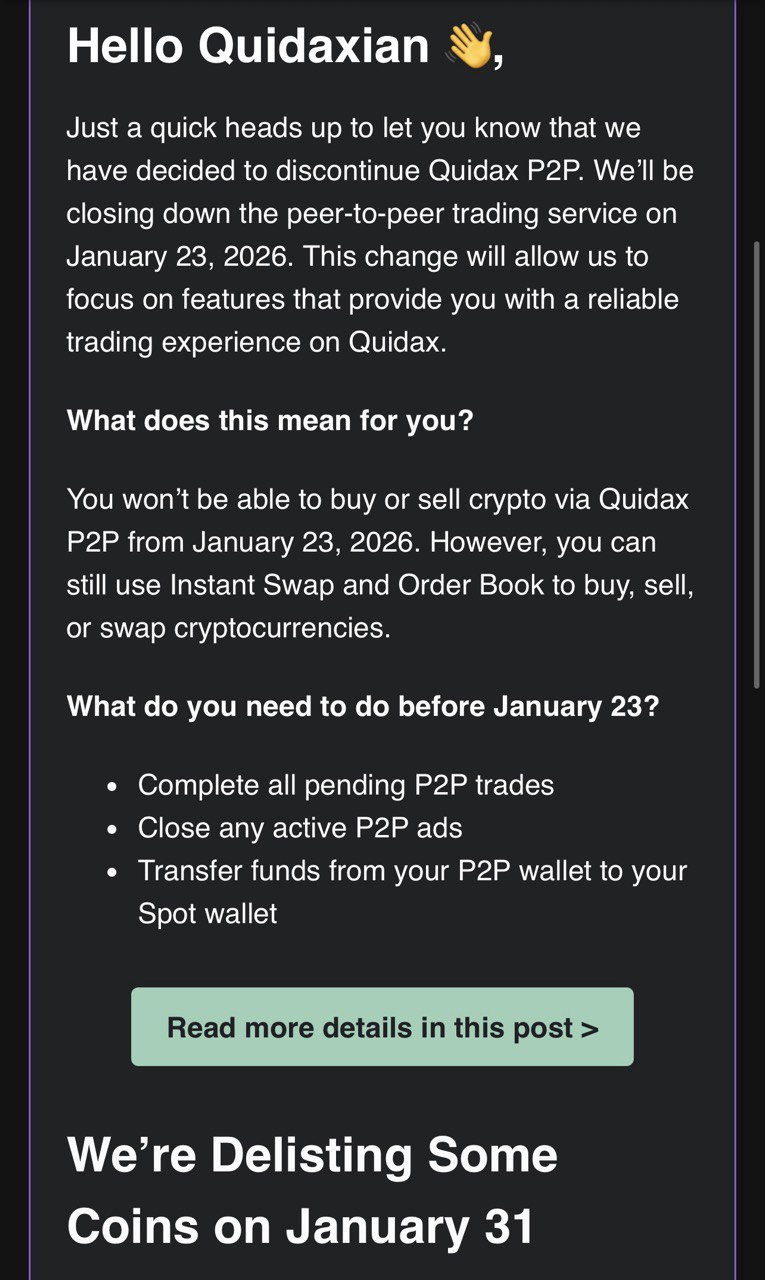
According to the exchange, this strategic decision will enable the team to concentrate resources on features that deliver a more reliable and streamlined trading experience for its user base, known as “Quidaxians.”
What the P2P Shutdown Means for Users
The discontinuation of P2P trading will have several immediate impacts on Quidax users:
• From January 23, 2026, users will no longer be able to buy or sell cryptocurrencies through the Quidax P2P marketplace.
• Alternative trading methods remain available, including Instant Swap and Order Book features for buying, selling, and swapping digital assets.
• Users can continue trading cryptocurrencies seamlessly through these alternative platforms without interruption to their overall trading activities.
Critical Actions Required Before January 23 Deadline
Quidax has urged all users actively engaged in P2P trading to take the following steps before the January 23 deadline:
• Complete all pending P2P trades to avoid complications.
• Close any active P2P advertisements to prevent unfulfilled orders.
• Transfer all funds from P2P wallets to Spot wallets to ensure continued access to assets.
Failing to complete these actions may result in temporary inaccessibility to funds or incomplete transactions, making it essential for users to act promptly.
35 Cryptocurrencies Set for Delisting on January 31
In addition to shuttering its P2P service, Quidax will remove 35 cryptocurrencies from its platform on January 31, 2026. This significant delisting exercise represents one of the exchange’s largest portfolio adjustments to date.
The exchange has published a comprehensive blog post detailing the full list of tokens scheduled for removal, the rationale behind the decision, and critical timelines for affected users. While the specific tokens were not listed in the announcement, Quidax emphasized that the delisting is part of its commitment to maintaining a curated selection of cryptocurrencies that align with its quality and reliability standards.
Reasons Behind the Mass Delisting
Although Quidax has not disclosed specific reasons for each token’s removal in the general announcement, cryptocurrency exchanges typically delist assets for several reasons, including low trading volume, regulatory concerns, project abandonment, security vulnerabilities, or failure to meet the exchange’s listing standards.
The decision to remove 35 tokens suggests a comprehensive review of the exchange’s cryptocurrency offerings, likely aimed at streamlining operations and focusing on more established or actively traded digital assets.
Options for Holders of Delisted Tokens
Users holding any of the 35 affected cryptocurrencies have two primary options:
• Convert the tokens to other supported cryptocurrencies before the January 31 deadline.
• Withdraw the tokens to external wallets (for those cryptocurrencies where withdrawal functionality is available).
For users who prefer to wait, Quidax has confirmed that withdrawal functionality will remain available even after the January 31 delisting date, allowing token holders to move their assets off the platform at their convenience.
Impact on Nigerian Crypto Market
Quidax’s decision to discontinue P2P trading comes at a time when peer-to-peer cryptocurrency trading has become increasingly popular in Nigeria and across Africa. P2P platforms have served as crucial tools for cryptocurrency adoption in regions where traditional banking infrastructure presents challenges for digital asset transactions.
The removal of P2P functionality from a major Nigerian exchange may indicate a strategic pivot toward more regulated and centralized trading mechanisms, potentially in response to evolving regulatory requirements or operational considerations.
Quidax’s Strategic Focus on Core Features
The announcement emphasizes Quidax’s commitment to improving user experience through its remaining trading options. The exchange will continue to offer Instant Swap, which allows for quick cryptocurrency conversions, and Order Book trading, which provides more advanced trading capabilities for experienced users.
By consolidating its services, Quidax appears to be betting on quality over quantity, potentially allowing for better resource allocation toward security, customer support, and platform stability. This strategy mirrors moves by other cryptocurrency exchanges globally that have streamlined their offerings to focus on core competencies.
Important Dates and Timeline
Quidax users should mark these critical dates on their calendars:
• January 23, 2026: Quidax P2P trading service officially shuts down. All P2P trades must be completed, ads closed, and funds transferred to Spot wallets by this date.
• January 31, 2026: Delisting of 35 cryptocurrencies takes effect. Users can convert or withdraw affected tokens before this deadline or withdraw afterward when convenient.
What’s Next for Quidax
In its announcement, Quidax expressed appreciation for user understanding and support during this transition period. The exchange framed these changes as part of its ongoing efforts to improve the platform and deliver better value to its community.
While the removal of P2P trading and the delisting of dozens of cryptocurrencies represents significant changes, Quidax maintains that these decisions position the platform for enhanced reliability and user satisfaction in the long term. The exchange has not announced what new features or improvements users can expect following this restructuring, but the consolidation suggests a focus on optimizing existing services.
Learn more about Quidax here.