
Paxful, once the world’s largest peer-to-peer (P2P) Bitcoin marketplace and a cornerstone of Africa’s cryptocurrency adoption story, has announced it will permanently cease all operations by November 1, 2025. The closure brings an end to a ten-year run that helped millions of users across emerging markets access global crypto liquidity, while simultaneously highlighting the mounting regulatory and compliance pressures facing P2P trading platforms worldwide.
Strategic Shutdown Follows Years of Turmoil
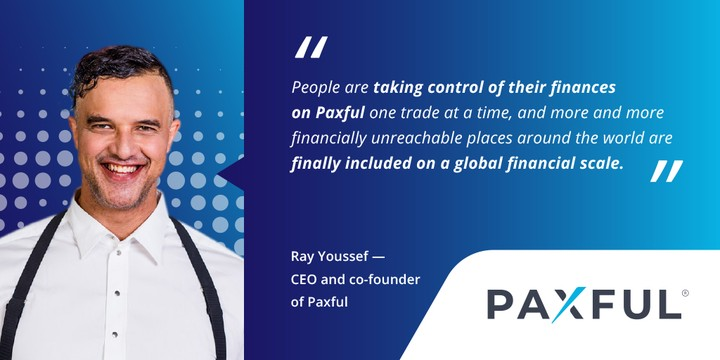
In an official company statement, Paxful attributed the decision to shut down to the “lasting impact of historic misconduct” by former co-founders Ray Youssef and Artur Schaback, combined with the unsustainable financial burden of ongoing compliance and remediation efforts. The platform, now operating under new ownership and leadership, explicitly condemned the actions of its former executives, stating they do not align with the company’s renewed ethical standards and values.
Critically, Paxful emphasized that the shutdown is a strategic decision rather than the result of insolvency or financial collapse. Despite returning to profitability following extensive restructuring efforts over the past two years, the company concluded that the operational costs and compliance requirements necessary to maintain the platform were no longer sustainable or justifiable.
Criminal Charges and Legal Battles Cast Long Shadow
The roots of Paxful’s demise trace back to serious legal troubles involving its founding team. According to court documents from July 2024, Artur Schaback, Paxful’s co-founder and former Chief Technology Officer (CTO), pleaded guilty to federal crimes in the United States. Schaback admitted to conspiracy charges for failing to establish and maintain an effective anti-money laundering (AML) program while overseeing the company’s P2P cryptocurrency trading platform between July 2015 and June 2019.
The legal drama intensified in January 2023 when Schaback filed a lawsuit against his co-founder Ray Youssef, who served as Paxful’s CEO. The lawsuit contained explosive allegations including misappropriation of company funds, money laundering, and evasion of U.S. sanctions against Russia. These accusations created a public rift between the co-founders and triggered investigations that would fundamentally alter Paxful’s trajectory.
Youssef, who departed from Paxful amid the controversy, went on to establish Noones, an emerging markets P2P marketplace that reported over 2 million users globally as of January 2025. His exit and the subsequent legal proceedings left Paxful facing both reputational damage and mounting regulatory scrutiny.
Comprehensive Restructuring Proves Insufficient
Over the past two years, Paxful underwent a sweeping organizational transformation in an effort to distance itself from its troubled past and meet modern compliance standards. The restructuring included a complete leadership overhaul, with new executives brought in to replace the controversial founding team. The company also undertook extensive balance sheet restructuring to address financial irregularities and implemented a global compliance upgrade designed to meet increasingly stringent regulatory requirements.
These efforts represented a significant investment of both capital and resources. The company worked to establish robust AML and Know Your Customer (KYC) protocols, enhanced transaction monitoring systems, and developed partnerships with compliance specialists. Despite these improvements successfully returning the platform to stability and profitability, Paxful’s new leadership ultimately determined that the ongoing operational burden was incompatible with long-term viability.
The decision reflects a harsh reality facing many cryptocurrency platforms: even successful remediation efforts cannot always overcome the lasting reputational and regulatory consequences of past misconduct. For Paxful, the shadow cast by its founders’ alleged criminal activities proved too substantial to escape.
User Fund Protection Prioritized in Wind-Down Process
Recognizing the potential for user concern during the shutdown announcement, Paxful moved quickly to assure customers about the safety of their funds. The company stated it remains financially sound and committed to ensuring a safe, transparent, and complete return of all user balances.
Customers have been strongly urged to withdraw their funds immediately to avoid potential delays as the platform progressively winds down its operations over the coming weeks. The company has emphasized that despite the closure, its financial position remains stable, and all users will have full access to their cryptocurrency and fiat balances throughout the transition period.
“We are deeply grateful for the opportunity to have served our 14 million users across 140+ countries over the past ten years,”
Paxful stated in its farewell message to the community. This acknowledgment of the platform’s global reach underscores the significant void its closure will create, particularly in underserved markets where alternative financial services remain limited.
Paxful’s Transformative Impact on African Crypto Adoption
Paxful’s closure represents a particularly significant loss for Africa’s cryptocurrency ecosystem. The platform played an instrumental role in the continent’s crypto adoption story, establishing itself as one of the top P2P marketplaces during the peak years of Bitcoin trading in Nigeria, Kenya, and South Africa.
What made Paxful especially valuable to African users was its remarkable accessibility. The platform supported over 400 different payment methods, including mobile money services like M-Pesa, bank transfers, and even gift cards. This flexibility proved crucial in regions where traditional banking infrastructure remains underdeveloped and where many citizens lack access to conventional financial services.
For millions of Africans, Paxful served multiple critical functions. It provided a means to access dollar-denominated assets as a hedge against local currency instability and inflation. It offered alternative remittance channels that were faster and cheaper than traditional money transfer services. It enabled entrepreneurial activity through Bitcoin trading and facilitated access to global e-commerce platforms that don’t accept local currencies.
The platform became particularly popular in Nigeria, Africa’s largest economy and cryptocurrency market. During periods when Nigerian authorities imposed restrictions on cryptocurrency transactions through formal banking channels, Paxful provided crucial access to crypto liquidity through its P2P model. Similar dynamics played out across Kenya, South Africa, Ghana, and other African nations where economic volatility and currency controls made Bitcoin an attractive financial tool.
A Pioneering Spirit That Transformed Financial Access
Despite its controversial end, Paxful’s contributions to cryptocurrency adoption and financial inclusion, particularly in Africa, deserve recognition. Founded in 2015 during Bitcoin’s early years, Paxful pursued a mission to build a borderless financial system accessible to all, regardless of geographic location or financial status.
For millions of users in emerging markets, Paxful represented their first exposure to cryptocurrency and their first experience with a truly global financial platform. The company’s willingness to support unconventional payment methods and serve markets that traditional financial institutions overlooked created genuine economic opportunity and financial access where little previously existed.
Many of today’s cryptocurrency startups focused on emerging markets draw inspiration from Paxful’s original vision, even as they learn from its cautionary tale about the importance of compliance and ethical leadership. The platform demonstrated that demand for accessible cryptocurrency services in developing nations is substantial and that creative solutions to payment and access challenges can achieve significant scale.
The End of an Era, The Beginning of New Challenges
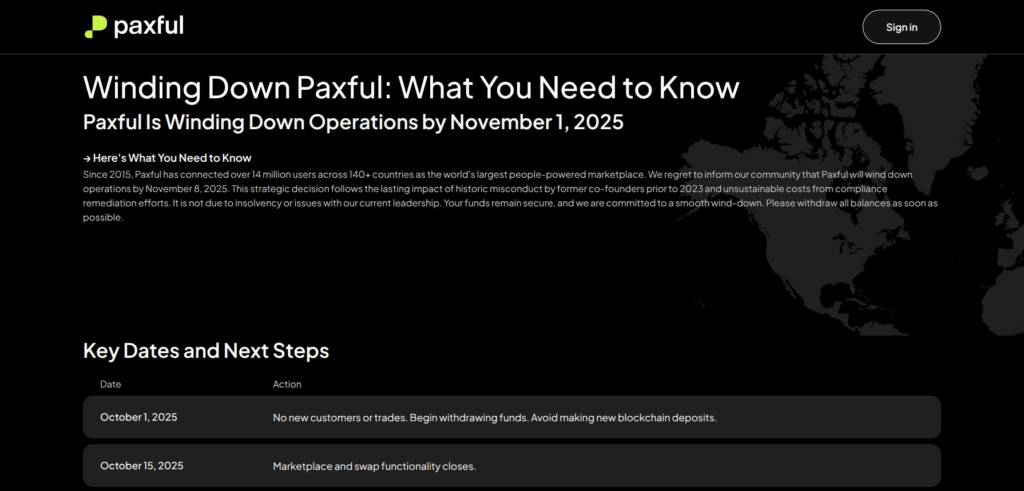
Paxful’s decision to cease operations by November 1, 2025, marks the end of a significant chapter in cryptocurrency history. For ten years, the platform served as a critical bridge connecting millions of users in emerging markets to the global cryptocurrency economy. Its flexibility, accessibility, and breadth of payment options made it particularly valuable in Africa, where it became synonymous with P2P Bitcoin trading.
Yet Paxful’s story also illustrates the immense challenges facing cryptocurrency platforms as regulatory scrutiny intensifies and the consequences of past misconduct persist despite organizational reform. The platform’s inability to overcome the legacy of its founders’ alleged criminal activities, despite substantial investments in compliance and restructuring, demonstrates that some reputational damage cannot be repaired.
As the cryptocurrency industry matures, Paxful’s experience will serve as both inspiration and warning. Its original mission, to create accessible financial services for underserved populations, remains as relevant as ever. But its failure to build adequate compliance infrastructure from the start and the criminal conduct of its leadership team created vulnerabilities that ultimately proved fatal.
For the millions of Paxful users who relied on the platform for financial access, remittances, or trading opportunities, the coming weeks will require finding alternative solutions. For the cryptocurrency industry as a whole, Paxful’s closure reinforces the urgent need to balance innovation and accessibility with robust compliance and ethical leadership.
The P2P cryptocurrency trading model that Paxful helped pioneer will continue, but likely in forms that are more compliant, more regulated, and perhaps more decentralized. Africa’s cryptocurrency adoption story, too, will continue, driven by the same fundamental needs that made Paxful valuable in the first place. The platforms that emerge to fill Paxful’s void will hopefully learn from both its achievements and its failures, building a more sustainable