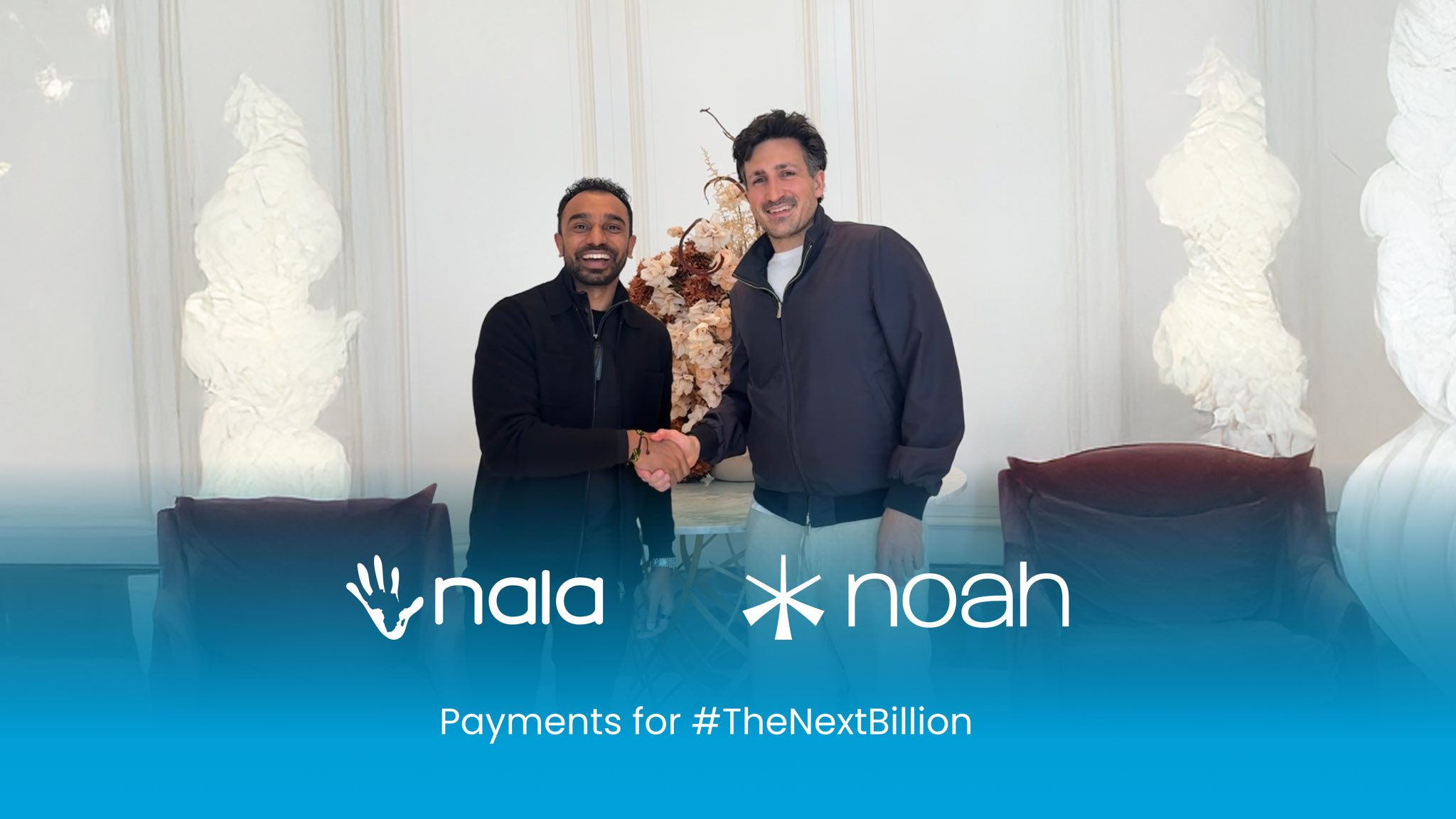
In a groundbreaking move that could reshape cross-border payments across Africa and emerging markets, leading African fintech company NALA has joined forces with global payments infrastructure provider Noah to launch a stablecoin-powered settlement network. This partnership represents a significant shift from viewing stablecoins as mere speculative crypto assets to recognizing their practical utility as regulated settlement infrastructure.
The announcement marks a pivotal moment for the fintech industry, particularly for markets that have long struggled with the inefficiencies of traditional cross-border payment systems. With transaction costs in some remittance corridors still averaging close to 9% and settlement times extending up to five business days, the timing couldn’t be more critical.
Breaking Down Barriers in International Money Transfers
For years, businesses and individuals sending money to Africa, Asia, and other emerging economies have been hamstrung by systemic bottlenecks inherent in legacy correspondent banking systems. These outdated networks create multiple pain points:
Settlement delays can stretch from three to five business days or longer, leaving businesses unable to access their funds when they need them most. This trapped liquidity represents a hidden tax on companies operating across borders, forcing them to maintain excess capital in multiple jurisdictions just to keep operations running smoothly.
Transaction fees remain stubbornly high, with some corridors charging nearly 9% per transfer. For small businesses and individuals sending remittances home, these costs can be devastating, eating into hard-earned income that families depend on.
The Noah-NALA network aims to dismantle these barriers by introducing a fundamentally different approach: near-instant USD collection paired with local currency payouts, operating around the clock, independent of traditional banking hours.
Inside the Technology: How It All Comes Together
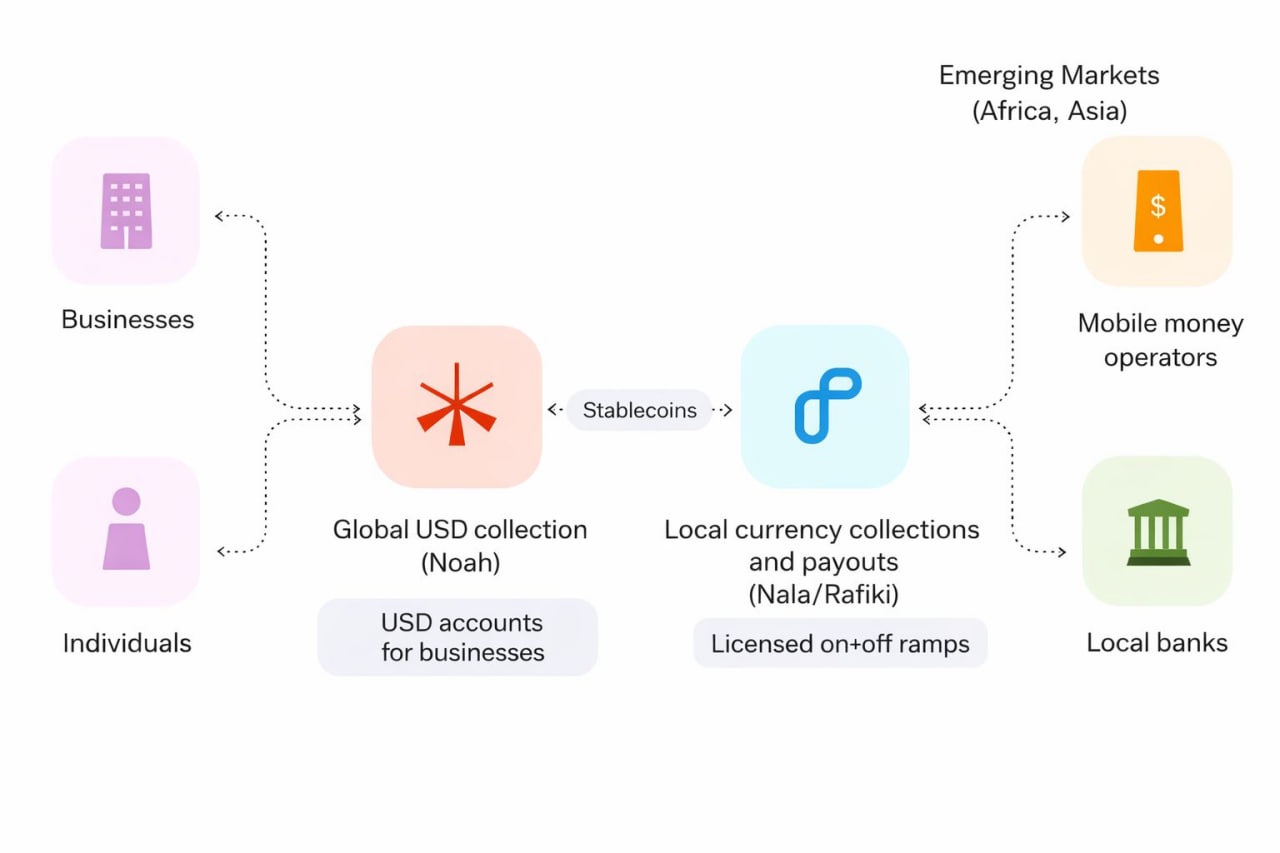
The settlement network operates through a sophisticated two-layer system that brings together Noah’s global infrastructure with NALA’s deep local market expertise. Here’s how it works in practice:
Global USD Collection Layer (Noah)
When businesses need to send money internationally, they start by depositing USD into regulated virtual accounts issued by Noah. The magic happens in the background: incoming bank transfers are instantly converted into stablecoins like USDC through Noah’s platform.
Crucially, Noah handles all the regulatory heavy lifting, including customer onboarding, KYC/AML compliance checks, and ongoing transaction monitoring. This creates a fully regulated gateway into the stablecoin ecosystem, addressing one of the key concerns that has prevented wider adoption of crypto-based payment rails.
Local Distribution Network (NALA + Rafiki)
Once funds are converted into stablecoins, they flow seamlessly into NALA’s Rafiki payments infrastructure API. This is where local expertise becomes critical. Rafiki connects directly with banks and mobile money networks across Africa and other emerging markets, enabling final payouts in local currencies.
The network supports compliant bilateral flows between stablecoins and local currencies, backed by more than 10 regulatory licenses held by NALA. This isn’t a workaround or a gray area, it’s fully licensed, regulated payments infrastructure built for the modern era.
Together, these layers deliver what traditional systems simply can’t: real-time settlement with local currency payouts, dramatically slashing both time and cost compared to legacy correspondent banking.
Who Benefits? Real-World Use Cases That Matter
The Noah-NALA network isn’t just theoretical infrastructure, it addresses concrete pain points that businesses and individuals face every day:
Global Payroll and Freelancer Payments
Companies with distributed teams across Africa can now pay employees and contractors in their local currency with USD-denominated settlement happening almost instantly. No more waiting days for payroll to clear or dealing with expensive wire transfer fees that eat into compensation.
Cross-Border Treasury Management
Enterprises gain real-time visibility and control over their liquidity across multiple jurisdictions. Instead of maintaining large cash balances trapped in local bank accounts to ensure operational continuity, companies can move funds on demand as needed. This represents a significant unlock of working capital.
Currency Stability for Volatile Markets
Access to virtual USD accounts provides businesses and individuals in volatile currency environments with a practical hedge against devaluation. Rather than watching savings erode, people can hold value in USD and convert to local currency only when needed.
E-Commerce and Marketplace Settlements
Online platforms can collect payments globally in USD, then distribute funds to sellers and service providers locally in their preferred currency. This dramatically simplifies the operational complexity of running cross-border marketplaces while improving the experience for sellers who receive faster payouts.
What This Means for Africa’s Fintech Ecosystem
NALA has emerged as one of Africa’s leading fintech companies, boasting over 1 million active users and impressive growth metrics including 10x revenue growth that helped the company secure $40 million in Series A funding. The company holds more than 10 regulatory licenses across different jurisdictions and has established partnerships with major institutions including Equity Bank Kenya and the Bank of Ghana.
This latest partnership with Noah amplifies NALA’s infrastructure capabilities significantly. By combining forces with a global payments provider, NALA can now offer its users access to a settlement network that operates at a scale and speed previously unavailable to African businesses.
Shah Ramezani, Founder and CEO of Noah, captured the significance of this collaboration in stark terms: “For years, emerging markets have been underserved by global payment infrastructure that was never designed for its scale, speed, or realities. Stablecoins are not the story on their own, they are the rail that finally makes instant, compliant USD settlement possible at scale.”
His comments underscore a crucial point often lost in crypto hype cycles: the technology itself is not the end goal. Rather, stablecoins are simply the most efficient tool currently available to solve long-standing problems in cross-border payments.