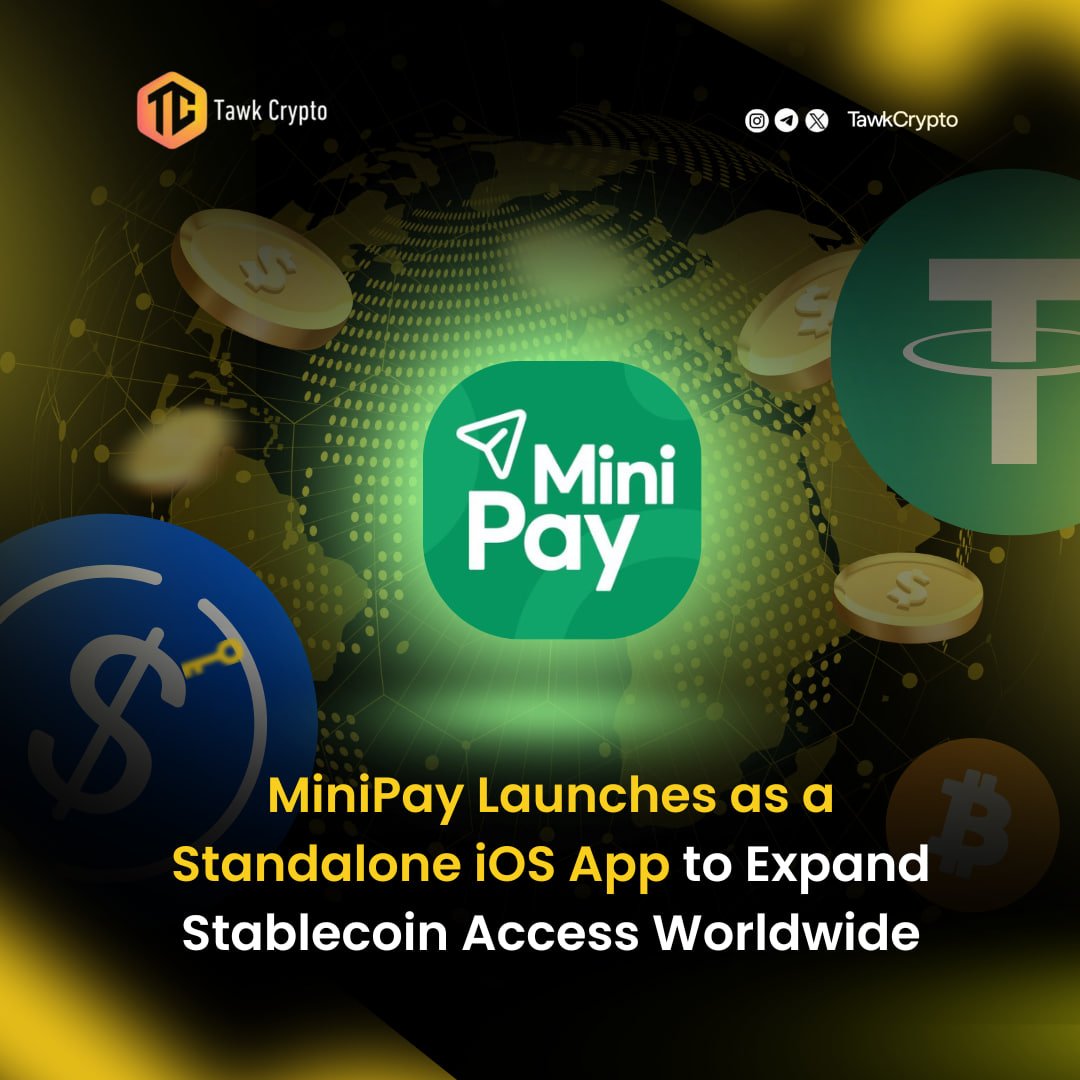
MiniPay, the stablecoin wallet developed by web browser company Opera and powered by the Celo blockchain, is now officially available as a standalone iOS app. This move comes just months after the app debuted independently on Android, marking a significant step in MiniPay’s mission to drive global financial inclusion through stablecoin adoption.
From Opera Mini Integration to Global Expansion
Initially launched in Nigeria in 2023, MiniPay was embedded directly into the Opera Mini browser, giving millions of African users access to dollar-denominated stablecoin payments. Since then, the app has recorded over 8 million users, including 1 million new sign-ups following the launch of the Android version in October 2024.
Now available on both Android and iOS as a standalone app, MiniPay can serve users beyond the browser ecosystem, opening up access to a broader global audience looking for fast, low-cost, and self-custodial crypto payments.
Key Quote
“MiniPay becoming a standalone app is a crucial step in helping people around the world access the global dollar system,” said Jørgen Arnsen, Executive Vice President at Opera.
“Through Celo’s advanced Ethereum L2 network, users can send, receive, spend, and save money anywhere in the world, and then put their funds to use in so many different ways within our growing ecosystem of Mini Apps.”
Why It Matters
MiniPay’s growth reflects the increasing demand for accessible stablecoin wallets, especially in regions affected by currency volatility, remittance inefficiencies, and limited banking infrastructure. With its low fees, mobile-first design, and integration with the Celo ecosystem, MiniPay aims to become a go-to financial tool for both the banked and unbanked.
Key features of MiniPay include:
- Self-custodial wallet control
- Fast and low-cost transfers using the Celo network
- Native cUSD stablecoin support
- Integration with “Mini Apps” for spending and financial services
What’s Next?
With availability now expanded to iOS devices, MiniPay is positioning itself to tap into broader emerging markets across Africa, Latin America, and Southeast Asia, where mobile access is high but financial infrastructure remains limited.