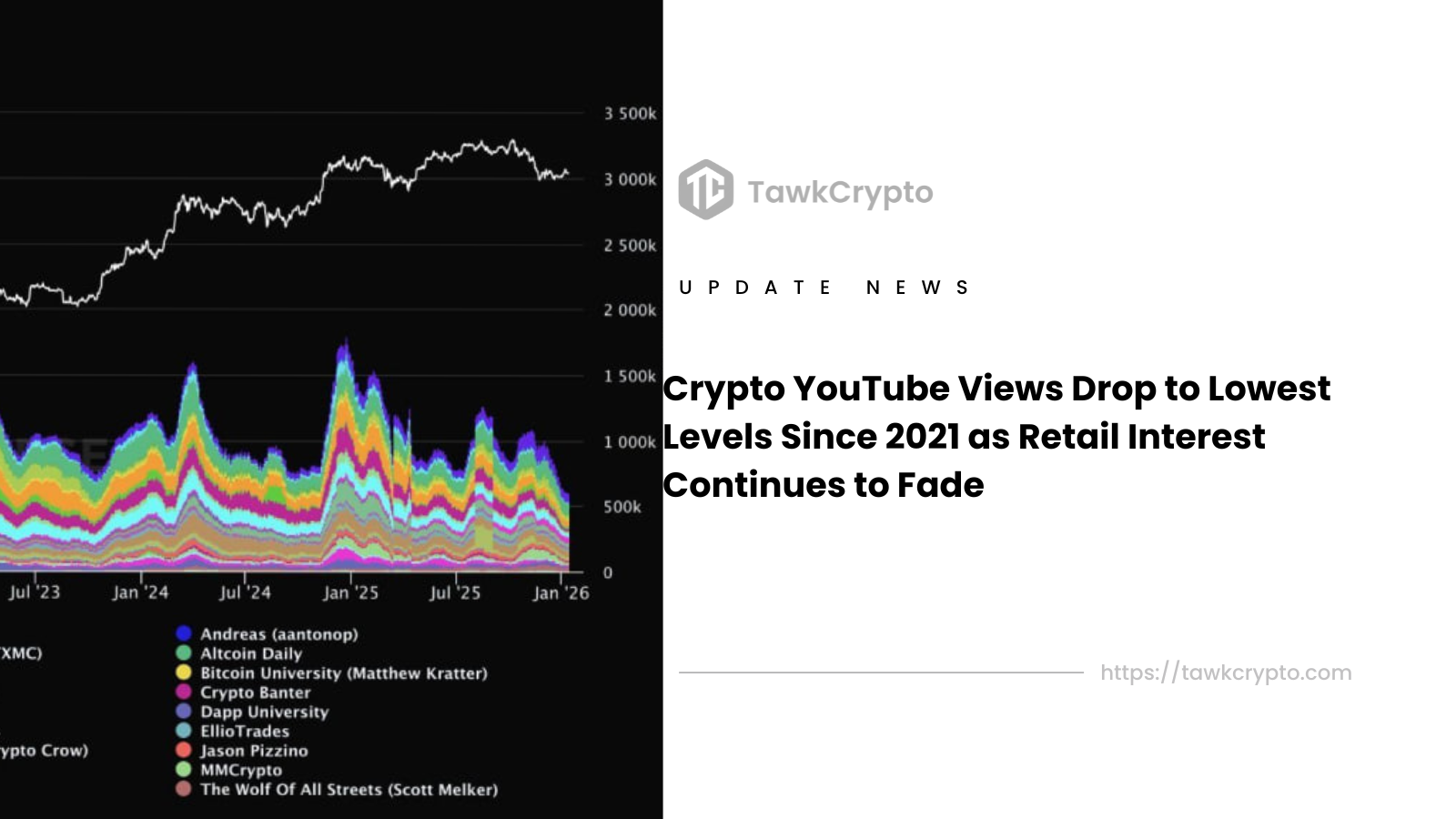
The crypto content economy is flashing warning signals. After months of steady decline, viewership of cryptocurrency-related content on YouTube has collapsed to its lowest levels since January 2021, marking a dramatic shift in retail engagement that extends far beyond any single platform’s algorithm changes.
The data, revealed by ITC Crypto founder Benjamin Cowen through a 30-day moving average of views across major crypto YouTube channels, paints a sobering picture of waning retail interest, one that could have significant implications for market dynamics in 2026.
A Multi-Platform Collapse
Cowen’s analysis, shared over the weekend, demonstrates that the decline isn’t isolated to one platform or the result of a single algorithm tweak. “So it’s not just X and an algorithm change,” he noted, referencing similar drops in engagement across crypto channels on Elon Musk’s rebranded social media platform.
The viewership cliff has been particularly steep since October 2025, with content creators across platforms reporting unprecedented drops in engagement metrics. What makes this decline especially noteworthy is its consistency, it’s happening simultaneously across YouTube, X (formerly Twitter), TikTok, and other social platforms where crypto content thrives.
Crypto YouTuber Tom Crown contextualized the severity of the situation:
“It has collapsed across all platforms, and has had a noticeable local decline since just October.” He added a particularly striking observation: “In reality, it’s been in a ‘bear market’ since 2021, having never reached even near those highs.”
This sentiment was echoed by Bitcoin investor known as “Polaris XBT,” who bluntly stated: “This is literally bear market levels of social interest.”
The 2021 Peak That Never Returned
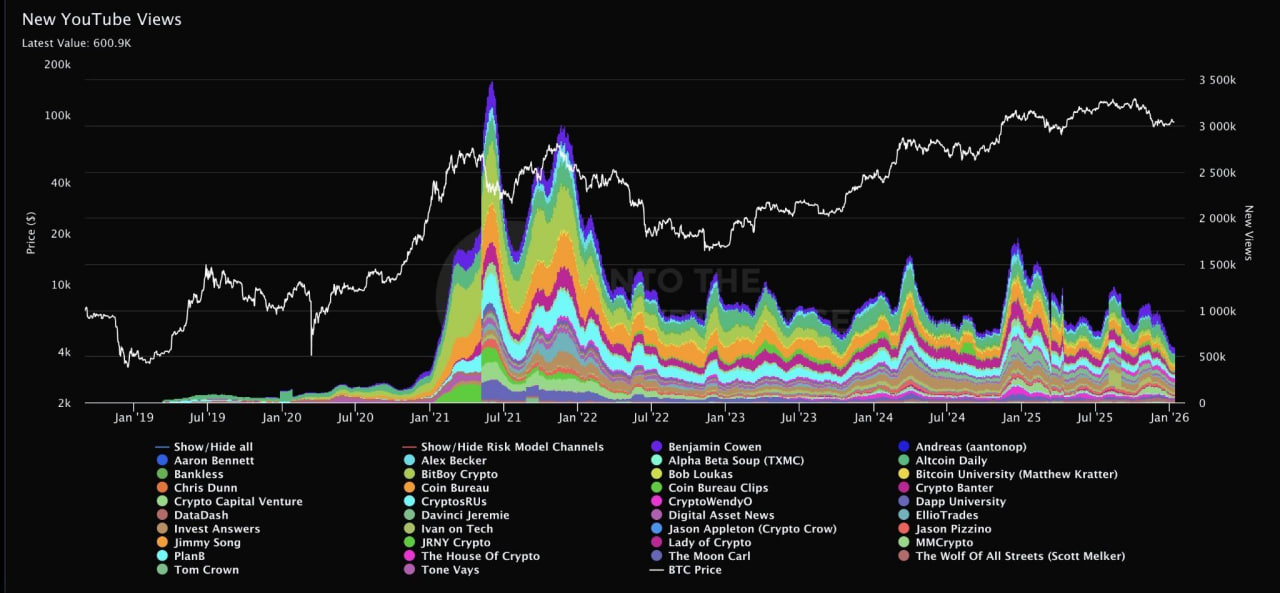
To understand the magnitude of this decline, it’s essential to look back at the 2021 crypto boom. During that period, crypto content exploded across social platforms, driven by retail FOMO (fear of missing out), sky-high Bitcoin prices, and the NFT mania that captured mainstream attention.
Jesus Martinez, a YouTube content creator who built his channel from early 2022, shared his experience with the changing landscape:
“I’ve experienced some intense peaks, but nothing ever came close to the few videos I created in the peak of 2021.”
Martinez’s observation highlights a fundamental shift in the crypto content ecosystem. Despite multiple market rallies, product innovations, and institutional adoption milestones since 2021, retail engagement has never recovered to those euphoric levels. The 2021 peak now appears to have been an anomaly rather than a new baseline for crypto interest.
Why Retail Is Tuning Out
Several factors have contributed to this dramatic decline in crypto content consumption, and they go far beyond simple market price action.
Scam Fatigue and Pump-and-Dump Schemes
TikTok content creator “Cloud9 Markets” pointed to a critical issue plaguing the crypto space: the proliferation of scams and pump-and-dump schemes centered around what many call “ponzi” altcoins. “Retail is tired of getting rekt,” they observed, using crypto slang for being financially wrecked by bad investments.
The retail investor experience over the past few years has been particularly brutal. Countless projects launched with grand promises only to collapse within months or even weeks. High-profile failures like the FTX implosion, the Terra/LUNA ecosystem crash, and numerous rug pulls have left retail investors burned out and skeptical.
When every new token launch is potentially a scam and every crypto influencer might be promoting the next pump-and-dump, it’s no wonder retail investors are walking away from the content that once excited them.
The Institutional Takeover
One of the most significant underlying trends is the shift in who’s actually driving crypto markets. The current cycle has been characterized by institutional adoption, BlackRock’s Bitcoin ETF, major corporations adding crypto to their balance sheets, and traditional financial institutions building blockchain infrastructure.
While this institutional involvement brings legitimacy and stability, it has fundamentally changed the nature of crypto markets. The wild, retail-driven price swings that once made for compelling content and quick gains have been replaced by more measured, institutional-grade market movements.
“The trend also reinforces the premise that institutions have been driving markets this cycle, with retail taking a back seat,” noted analysts tracking the viewership decline.
For content creators, this creates a challenge. Institutional crypto adoption doesn’t generate the same excitement as a meme coin pumping 1000% in a week. It’s important, but it’s not necessarily clickable content.
Alternative Investment Migration
Marc Shawn Brown, Cointelegraph’s head of social media, offered another compelling explanation for retail’s exodus: they’ve likely moved to other asset classes. “They’ve likely pivoted into precious metals/macro. People want returns, not stories of when returns could come,” he observed.
The numbers support this theory. Brown pointed out that “2025 was hard. -7% return for BTC and palladium, rhodium, cobalt, silver, and gold all outperformed.”
When Bitcoin, the flagship cryptocurrency and supposed inflation hedge, delivers negative returns while traditional safe havens like gold shine, retail investors understandably reconsider their allocations. And when they leave crypto, they stop consuming crypto content.
What Content Creators Are Experiencing
The viewership collapse has had real consequences for the crypto content creator economy. Many creators who built channels during the bull market are now struggling to maintain audience engagement and monetization.
The challenge is multifaceted:
Audience Fatigue: After years of “this time is different” narratives that didn’t pan out, audiences have become cynical. Generic bullish content no longer cuts through the noise.
Algorithm Changes: While not the sole cause, platform algorithm adjustments have compounded organic declines. YouTube and other platforms may be deprioritizing crypto content that generates fewer positive engagement metrics.
Competition from Traditional Finance: As crypto becomes more mainstream, traditional financial media outlets have increased their crypto coverage. This fragments the audience that once relied exclusively on crypto-native creators.
Monetization Pressure: With declining views come declining ad revenue and sponsorship opportunities. This creates a vicious cycle where creators can’t invest as heavily in production quality, further reducing their competitiveness.
The Bright Side: Social Sentiment Shows Signs of Stabilization
Despite the gloomy viewership data, there are glimmers of hope in other metrics. On-chain analytics platform Santiment reported Friday that social sentiment toward Bitcoin “is clearly getting more and more positive, not that the bleeding has at least shown mild signs of reversing.”
This divergence between viewership and sentiment is noteworthy. It suggests that while fewer people are actively seeking out crypto content, those who remain engaged are becoming more optimistic about Bitcoin’s prospects.
Santiment emphasized that the $90,000 price level for Bitcoin is “going to be crucial for retailers to stay positive.” If Bitcoin can hold above this psychological threshold, it might serve as a catalyst for renewed retail interest.
However, Santiment’s analysis of Ethereum sentiment was less encouraging, noting that it “appears to be scattered, and not showing any consistent trends as of now.” This scattered sentiment around Ethereum, the second-largest cryptocurrency, suggests the broader altcoin market continues to struggle with direction and conviction.
Can Crypto Content Bounce Back?
History suggests that crypto interest is cyclical. The last time viewership was this low, in early 2021, it preceded one of the most explosive periods of retail interest in crypto history. However, banking on history to repeat itself may be wishful thinking.
Several factors could reignite retail interest:
Regulatory Clarity: If major jurisdictions establish clear, favorable regulatory frameworks for cryptocurrency, it could restore confidence and bring cautious investors back into the space.
Killer Applications: The emergence of truly useful blockchain applications that solve real problems for everyday people could spark genuine interest beyond speculation.
Economic Conditions: A shift in broader economic conditions ,particularly if traditional markets struggle, could drive renewed interest in alternative assets like cryptocurrency.
Price Action: Simply put, nothing attracts retail attention like green candles. A sustained bull run would likely bring viewers back to crypto content, though perhaps with more skepticism than in previous cycles.
The crypto content viewership collapse to early 2021 levels represents more than just a bad quarter for YouTubers and TikTokers, it’s a barometer for retail sentiment toward cryptocurrency as an asset class and cultural phenomenon.
After years of scams, failed projects, negative returns, and institutional dominance, retail investors appear to be taking an extended break from crypto. They’re not just HODLing quietly, many have left the space entirely, taking their attention and capital to precious metals, traditional equities, and other investment opportunities.
As for whether crypto content viewership will recover to 2021 levels, the honest answer is that nobody knows. What is certain is that when retail does return, if it returns, it will likely demand more substance and less hype than previous cycles. The creators and projects that survive this bear market in attention will be those that adapted to that reality.