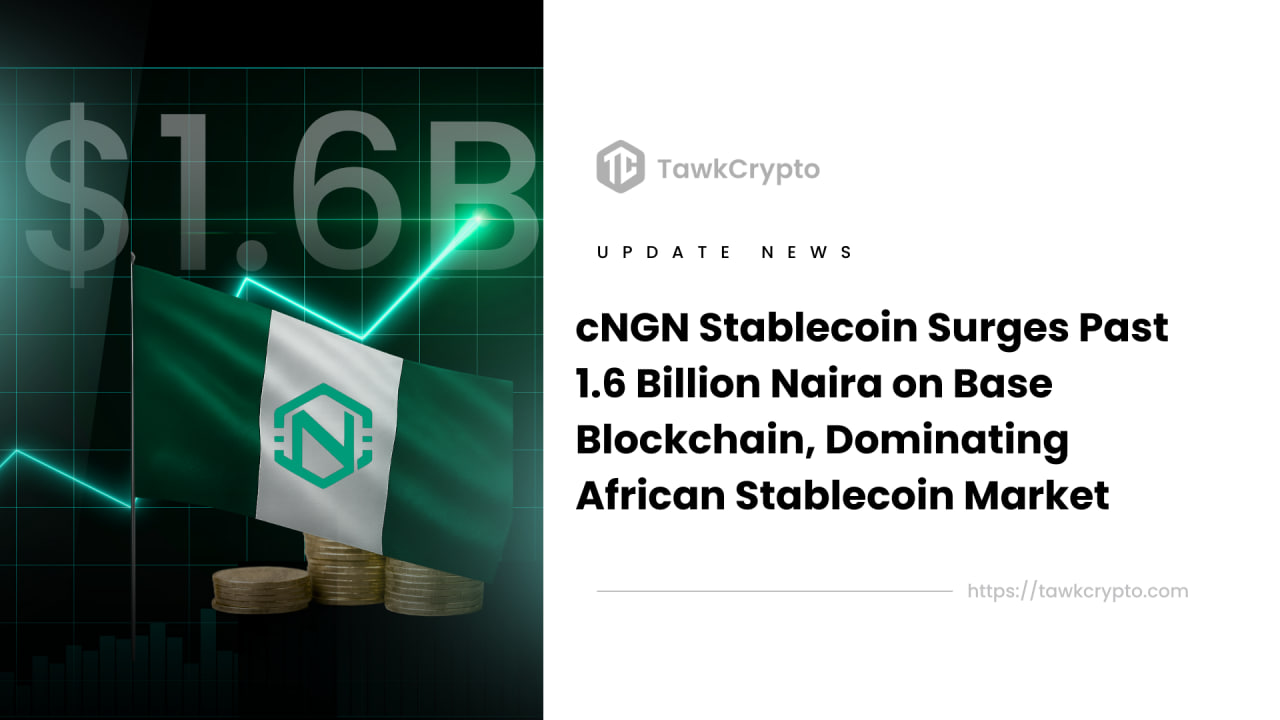
The compliant Nigerian Naira stablecoin, cNGN, has reached a significant milestone by crossing 1.6 billion Naira in circulating supply on Base blockchain, establishing a commanding lead in the African stablecoin ecosystem. This achievement positions Base as the undisputed leader for regulated African digital currencies.
Base Blockchain Captures 85% of cNGN Market Share
Recent data reveals that cNGN’s supply on Base is six times larger than on Binance Smart Chain (BSC), the second-largest chain by cNGN volume. This dramatic difference highlights a clear preference among Nigerian businesses and crypto users for the Base network when transacting with compliant Naira-backed digital assets.
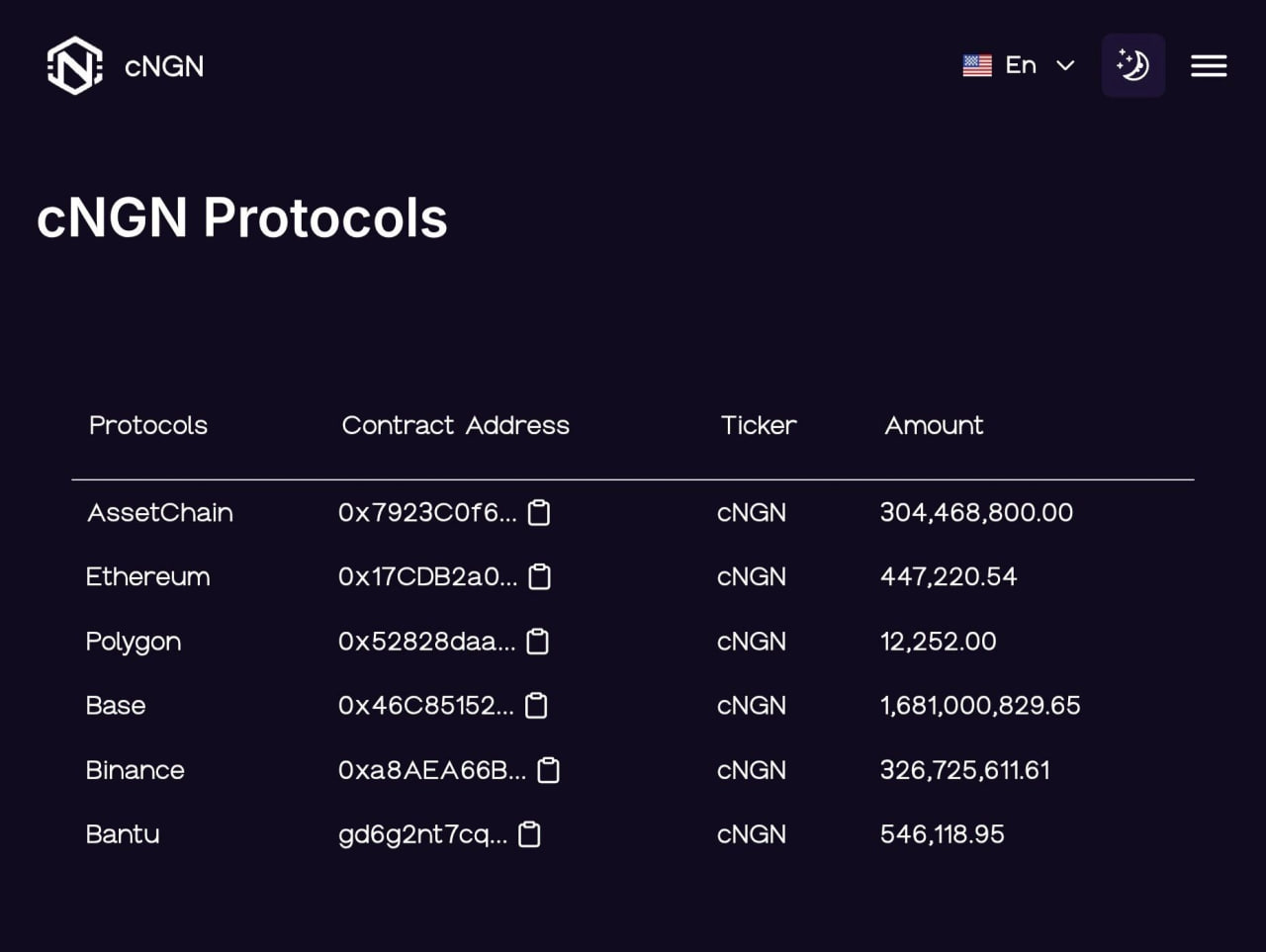
The numbers paint a compelling picture: if BSC holds approximately 266 million Naira worth of cNGN, Base’s 1.6 billion Naira represents more than 85% of the total market. Combined with all other blockchain networks where cNGN operates, Base still maintains a 6:1 advantage, demonstrating unprecedented market concentration.
Why Businesses Choose Base for cNGN Transactions
Several factors contribute to Base’s dominance in the Nigerian stablecoin market:
Lower Transaction Costs: Base, built as an Ethereum Layer 2 solution by Coinbase, offers significantly reduced gas fees compared to Ethereum mainnet while maintaining robust security. For Nigerian businesses processing frequent transactions, these cost savings translate directly to improved profit margins.
Speed and Efficiency: The network processes transactions in seconds rather than minutes, crucial for businesses requiring quick settlement times. This efficiency makes Base particularly attractive for remittance services, cross-border payments, and e-commerce platforms serving Nigerian customers.
Regulatory Compliance: cNGN’s compliance-first approach aligns perfectly with Base’s institutional-grade infrastructure. Businesses operating in regulated environments can confidently use cNGN on Base, knowing both the stablecoin and the underlying blockchain meet stringent compliance standards.
Developer Ecosystem: Base has cultivated a thriving developer community, resulting in numerous applications and integrations that support cNGN. This network effect creates more use cases and drives additional adoption among both businesses and individual users.
What This Means for African Cryptocurrency Adoption
The cNGN surge on Base signals several important trends in African crypto markets:
Nigeria continues to lead Africa’s cryptocurrency adoption, with recent surveys consistently ranking the country among the top ten globally for crypto usage. The preference for compliant stablecoins like cNGN suggests that African users are maturing beyond purely speculative investments toward practical, everyday applications of blockchain technology.
Stablecoins denominated in local currencies address a critical need in emerging markets. Unlike dollar-pegged stablecoins, cNGN eliminates foreign exchange risk for Nigerian users while providing the benefits of blockchain technology. This makes it ideal for domestic commerce, savings, and peer-to-peer transfers.
The 6x dominance ratio indicates that Base has become the de facto standard for African stablecoin infrastructure. Other African countries exploring compliant stablecoins will likely study Base’s success with cNGN as a model for their own implementations.
Base Emerges as Premier Blockchain for Compliant African Stablecoins
Coinbase’s Base blockchain has positioned itself as the preferred infrastructure layer for regulated African digital currencies. The platform’s combination of low costs, high performance, and regulatory compliance creates an ideal environment for stablecoins serving African markets.
This strategic positioning arrives at a pivotal moment. As African governments and central banks increasingly explore digital currency frameworks, private sector solutions like cNGN on Base demonstrate the viability and demand for blockchain-based financial infrastructure on the continent.
Industry observers note that Base’s success with cNGN could attract other African stablecoin projects. A Kenyan Shilling or South African Rand stablecoin might naturally gravitate toward Base, given the proven infrastructure and existing network effects.
The Growing Importance of Compliant Stablecoins in Nigeria
Nigeria’s relationship with cryptocurrency has evolved significantly in recent years. Following the Central Bank of Nigeria’s 2021 restrictions on cryptocurrency transactions by financial institutions, the market shifted toward peer-to-peer trading and compliant solutions.
cNGN represents the new generation of Nigerian crypto assets: fully compliant, transparent, and designed to work within existing regulatory frameworks rather than around them. This approach has clearly resonated with the market, as evidenced by the remarkable growth on Base.
The stablecoin serves multiple use cases in the Nigerian economy. Businesses use it for supplier payments, freelancers receive international remittances in cNGN, and individuals save in a stable digital asset without exposure to the volatility of cryptocurrencies like Bitcoin or Ethereum.
Technical Infrastructure Supporting Growth
Base’s technical architecture plays a crucial role in supporting cNGN’s growth. As an Optimistic Rollup Layer 2 solution, Base inherits Ethereum’s security while offering dramatically improved throughput and lower costs.
Transactions on Base typically cost fractions of a cent, compared to several dollars on Ethereum mainnet during peak periods. For Nigerian users making frequent small-value transactions, this cost difference is transformative. A person sending 5,000 Naira to a family member pays negligible fees on Base, whereas similar transactions on other chains might consume a significant percentage of the transfer amount.
The blockchain’s compatibility with Ethereum tools and wallets also lowers barriers to entry. Users familiar with MetaMask or other Ethereum wallets can easily add Base and begin transacting in cNGN with minimal learning curve.
Market Implications and Future Outlook
The concentration of cNGN liquidity on Base creates important market dynamics. Traders and investors naturally gravitate toward the most liquid markets, which tends to reinforce Base’s dominance. This network effect could make it increasingly difficult for other blockchains to capture market share in the Nigerian stablecoin space.
For the broader cryptocurrency market, cNGN’s success demonstrates the potential of regional stablecoins in emerging markets. Rather than relying solely on USDT or USDC, local solutions that address specific regulatory and practical needs can achieve significant adoption.
Looking ahead, sustained growth in cNGN could encourage the development of complementary financial services on Base. Lending protocols, decentralized exchanges, and yield-generating applications built specifically for cNGN would further entrench Base’s position as the home of Nigerian decentralized finance.
Challenges and Considerations
Despite the impressive growth, challenges remain. Regulatory uncertainty continues to characterize Nigeria’s cryptocurrency landscape. While cNGN operates compliantly, changes in government policy could impact its adoption trajectory.
Competition from other stablecoin solutions, particularly central bank digital currencies (CBDCs), represents another consideration. Nigeria’s eNaira CBDC, while not yet widely adopted, could eventually compete with private stablecoins for market share.
Additionally, as cNGN grows, maintaining the stablecoin’s peg and ensuring sufficient reserves become increasingly critical. Users need confidence that every cNGN in circulation is backed by actual Naira reserves.
A Milestone for African Blockchain Adoption
The achievement of 1.6 billion Naira in cNGN supply on Base blockchain represents more than just numerical growth. It signals the maturation of African cryptocurrency markets, the viability of compliant regional stablecoins, and the emergence of Base as the infrastructure layer of choice for African digital finance.
As Nigerian businesses and users continue to embrace cNGN, the 6:1 advantage over other blockchains seems likely to persist or even grow. For Africa’s largest economy, the future of digital currency appears to be not just blockchain-based, but specifically built on Base.
This trend bears watching by investors, developers, and policymakers across Africa and beyond. The success of cNGN on Base may well serve as a blueprint for how other African nations integrate blockchain technology into their financial systems, potentially reshaping the continent’s economic landscape for the digital age.
Read Also: AEON Integrates X-Layer to Expand Scan-to-Pay Crypto Payments Across Emerging Markets