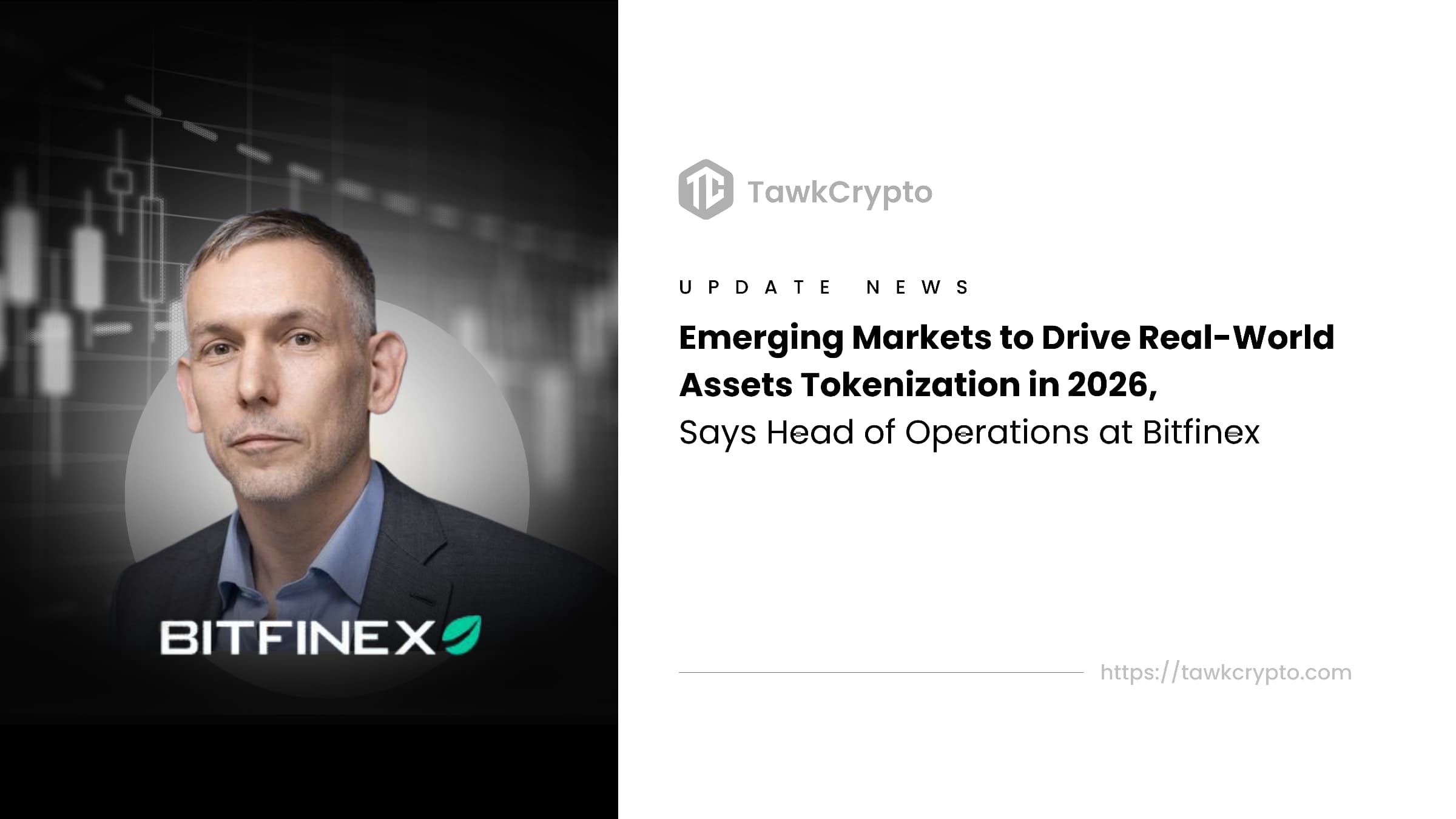
Emerging markets, including Africa, are embracing the tokenization of real-world assets (RWAs) to widen access to physical asset investments and facilitate seamless foreign capital inflows.
According to Jesse Knutson, head of operations at crypto exchange Bitfinex, RWA tokenization can help address challenges within traditional finance (TradFi) by enabling on-chain capital formation and reducing reliance on intermediaries.
Knutson noted that RWA tokenization serves different functions across regions. In developed markets, fixed-income instruments dominate tokenized offerings, while in developing economies, tokenization use cases are more concentrated around real estate and commodities.
He added that while the tokenized RWA market could surpass $1 trillion in value over the next decade, this growth will depend on the successful deployment of scalable products and not just pilot or sandbox programs.

Real-World Asset Tokenization in Africa
As Africa continues to adopt cryptocurrency and blockchain technology, the continent is increasingly turning to real-world asset tokenization to expand financial access and promote inclusive participation, particularly among underbanked populations.
The growing adoption of U.S. dollar-pegged stablecoins such as USDT and USDC reflects demand for financial instruments that can be used efficiently across borders, especially in regions with volatile local currencies.
Tokenization can take multiple forms. Assets may be fungible, such as stablecoins that represent fiat currencies on-chain, or non-fungible, where tokens represent unique, non-interchangeable assets. In both cases, tokens serve as digital representations of ownership.
RWA tokens can also enhance transparency of transactions and improve efficiency, thereby reducing complexities commonly associated with international trade, including high transaction costs and dependence on third-party intermediaries.
Notable Tokenization Initiatives in Africa
Several African countries are actively exploring tokenization initiatives involving real estate and government bonds.
Namibia’s Copper Mine Tokenization
In 2024, Damrev, a leading African real-world asset tokenization company, announced a deal to tokenize copper mines in Namibia.
Under the initiative, the copper mines will be digitized on the Stellar blockchain, with tokens representing their value. The project aims to attract both retail and institutional investors and also enable seamless secondary market trading.
The project involved collaboration with local stakeholders to ensure that the benefits of tokenization extend to members of the community.
Kenya’s Real Estate Tokenization Pilot Project
Also in 2024, the Capital Market Authority of Kenya approved Yeshara Tokens, a real estate tokenization platform, to test its innovative blockchain-based real estate tokenization platform.
The platform aimed to increase participation in capital markets, particularly in real estate, by simplifying investment processes and lowering entry barriers for a wider range of investors.
South Africa’s Tokenized Bond Issuance
In April 2024, a South African private school network completed what is reported as one of the first regulated tokenized bond issuances on the continent.
The offering raised R100 million directly from the public, which accounted for 65.5% of the total funds, with 24% coming from non-institutional investors. The outcome highlighted how tokenized assets can expand access, particularly for retail investors.
Ghana’s Government Bond Tokenization Partnership
Earlier in the year, a brokerage firm, GFX, announced a partnership with tokenization platform Libeara to broaden access to government bonds across Africa.
The collaboration aims to tackle the financial access gap in Africa, ensuring that small-value investments are available to the average African.
The announcement was made before Ghana’s VASP was enacted; as such, the program was to proceed under a pilot program under Ghana’s regulatory sandbox.
Conclusion
Real-world asset tokenization holds significant potential to transform Africa’s financial and corporate sectors by enabling more efficient capital raising, unlocking foreign liquidity, and expanding market participation at the grassroots level.
However, regulatory clarity on digital asset activity remains limited across much of the continent, which could pose challenges for investors and market participants as tokenization initiatives continue to scale.