South Africa’s crypto scene has exploded in recent years. According to a 2024 survey, 68% of South Africans have bought or held cryptocurrency, second only to Nigeria globally. Local exchanges handled roughly $26 billion in transactions over the past year.
This surge comes as regulators finally bring clarity: the FSCA now treats crypto as a financial product and began licensing Crypto Asset Service Providers in 2023. In fact, by late 2024 the FSCA had received 420 license applications (248 approved) for crypto exchanges.
All this means more investors can safely trade cryptocurrencies like Bitcoin (BTC) and Ethereum (ETH) on regulated platforms.
Below we cover how to pick a great crypto exchange, then review the top 5 centralized exchanges in South Africa (2025), and show a handy comparison table. Doesnt matter if you’re a beginner or a pro, these tips and reviews will help you choose the best exchange for your needs.
Why Crypto is Booming in South Africa
- High Adoption: South Africa ranks second in the world for crypto ownership, 68% of citizens have invested in crypto. This is fuelled by youth interest and a desire for inflation hedges (crypto is seen as “future money” by many).
- Growing Volume: In 2024, South Africa’s crypto market saw about $26 billion flow through its exchanges. Institutional flows and investment funds have ramped up trading alongside retail interest.
- Regulatory Clarity: For years, crypto was in a gray area. Now the Financial Sector Conduct Authority (FSCA) has declared crypto assets “financial products” and begun licensing crypto exchanges (CASPs) under the FAIS Act. By December 2024, the FSCA had approved 248 CASP licenses, meaning many platforms (like Luno and VALR) must meet strict compliance and AML/KYC rules. This makes trading on licensed exchanges safer and more credible.
Together, these trends mean more South Africans are buying crypto via exchanges. To get started you’ll need a good centralized exchange (CEX), which brings us to the next section.
How to Choose a Good Crypto Exchange.
Not all exchanges are created equal. Whether you’re a first-time buyer or an experienced trader, look for these key features:
- Fees: Compare trading fees (maker/taker fees) and deposit/withdrawal fees. Low fees mean you keep more of your crypto. For example, VALR and Binance offer fees as low as 0.05–0.10% for high-volume traders, whereas easy-buy services or credit card purchases can cost 1–2% or more.
- ZAR Support: A top SA exchange must support the South African Rand. Check if it allows ZAR deposits and withdrawals (via bank EFT, instant systems, or cards) with reasonable fees. Most leading platforms let you fund your account in rand and cash out to local banks. E.g. Luno offers free standard EFT deposits and express ZAR withdrawals (R20 to most banks, free to Standard Bank).
- Regulation and Trust: Prefer exchanges recognized by South African regulators. VALR and Luno have applied for FSCA licenses and are registered as Financial Services Providers. Luno’s SA arm was officially recognized as a regulated FSP in 2024. A licensed exchange must meet strict standards (KYC, audits, safekeeping), which adds peace of mind.
- Security: Look for strong security measures, two-factor authentication (2FA), biometric login, cold (offline) storage of funds, and proof-of-reserves audits. Top exchanges regularly undergo security audits and keep most assets in cold wallets. (For example, OKX publicly uses 2FA, Proof-of-Reserves, and cold storage layers.) Always enable 2FA on your account regardless of platform.
- User Experience: Especially for beginners, a clean interface and helpful app are crucial. Platforms like Luno and VALR score high on usability, with mobile apps and learning resources. For advanced users, look for features like margin/futures trading, staking, or API access.
- Customer Support: Good support (live chat, email, or phone) can save you headaches. 24/7 support is ideal. Check that the exchange has a helpful FAQ and responsive support in case you hit any issues.
Start by making small trades on any new platform to learn the ropes. Keep only a bit of cash in exchange wallets (transfer larger balances to your own wallet) for better security. As one tip, set small test deposits/withdrawals first to ensure the process works. And always use 2FA and a strong password to secure your account.
Top 5 Crypto Exchanges in South Africa (2025)
Here we review each platform’s strengths, features, and who it’s best for. We include friendly advice and tips along the way. Each review ends with how to sign up via TawkCrypto links for exclusive perks.
1. VALR
VALR is South Africa’s homegrown exchange and currently one of the largest by volume. It boasts over 1 million users in SA and offers a wide range of coins (100+ cryptocurrencies, including all majors). Traders love VALR for its very low fees and good liquidity.
The maker/taker fees on VALR’s spot market are extremely competitive (taker fees from 0.05% and makers even as low as 0% or negative at high volumes). Even the “Simple Buy” function only charges about 1.6%. Deposits via EFT are free, and credit card deposits are 3.9% (about R39 on R1,000). First 30 ZAR withdrawals each month are free, making it economical to cash out (after that, it’s about R8.50 per withdrawal).
VALR’s platform is feature-rich: you get advanced trading charts, margin/futures markets, and an API if you want it. At the same time, its interface is clean and well-documented, making it accessible for beginners. The mobile app is polished and has biometric logins. The team behind VALR is local (ex-Goldman Sachs alumni), and they’ve worked closely with regulators.
The FSCA granted VALR its CASP license recently, so VALR is fully licensed and compliant.
Tip: When you start on VALR, try the Simple Buy to get Bitcoin or rand-backed stablecoins (like USDT) quickly. For trades, place limit orders to save on fees. And since VALR supports rand, you can deposit via bank EFT in a day or two – just remember to do a small test transfer first.
Sign up for VALR and get trading!
2. Luno

Luno is one of the oldest and most user-friendly crypto apps in South Africa. It’s popular for beginners because the app is straightforward and it emphasizes education and security. Luno supports around 25+ coins (BTC, ETH, LTC, XRP, and a handful of others).
It charges a flat 2% fee for instant buys or sells, but if you use the regular exchange orderbook, fees drop to 0.6% (taker) and can be as low as 0% maker (you even earn up to 0.02% when adding liquidity!). You can deposit ZAR via EFT (free) or instant EFT (1.4%) and even use a debit/credit card (about 3.9%). Withdrawals to South African banks are fast – Luno offers same-day, 24/7 withdrawals (free to Standard Bank, R20 to others).
Luno’s strong points are its simplicity and trust. It was one of the first exchanges in SA, and its local entity is also registered as a financial service provider. The app guides new users through buying Bitcoin step-by-step.
Security is solid: Luno offers 2FA and holds user funds in insured offline storage. They also publish a Proof-of-Reserves report each month, showing they have sufficient funds to cover customer balances (a nice transparency move).
Tip: If you’re new, start by buying a small amount (say R200 worth) of Bitcoin or Ethereum on Luno via the instant buy. Play around with sending crypto between wallets to understand blockchain delays (try sending a tiny amount of USDT or BTC to a friend!). And definitely complete Luno’s KYC verification early, it only takes a few minutes and unlocks fast ZAR deposits/withdrawals.
Join Luno and begin your crypto journey!
3. Binance
Binance is the world’s largest crypto exchange, and it’s widely used in South Africa too. It offers 350+ coins and a dizzying array of features: spot trading, margin, futures, staking, savings accounts, and more. For traders, Binance’s base fee is a low 0.1% (even lower if you use BNB to pay fees or have VIP status).
One caveat for South African users: Binance doesn’t hold a local banking license, so you can’t deposit ZAR via a direct bank transfer. Instead, South Africans typically buy crypto on Binance using Stitch Money, which charges 1.4% to deposit rand, or use the peer-to-peer (P2P) platform on Binance to swap ZAR with other users. Cash-outs are also via Stitch (flat R20 fee). These extra steps add slight fees, but for crypto-savvy users they’re still reasonable.
The upside of Binance is sheer choice and liquidity. You can trade almost any coin, including exotic alts and dozens of stablecoins. The mobile app is very polished and the site supports English with customer support. Security-wise, Binance provides every standard feature: 2FA (Google Auth or SMS), withdrawal address whitelists, and they maintain a “SAFU” insurance fund to cover losses from breaches (though note, like any CEX your funds are only as safe as the exchange’s security).
Binance global is not FSCA-regulated, but its reputation is strong and it has expanded compliance (e.g. it has licenses in many countries, though SA licensing is still in progress as of 2025).
Tip: To avoid Stitch fees, consider funding Binance via Stablecoins. For example, buy USDC on a local exchange like VALR or Luno (with ZAR), then deposit the USDC into Binance. This way you bypass fiat on-ramp fees. Also, enable all security options on Binance (2FA, anti-phishing code) and withdraw to a crypto wallet regularly rather than keep huge balances on the exchange.
Trade on Binance and explore global crypto markets!
4. Yellow Card
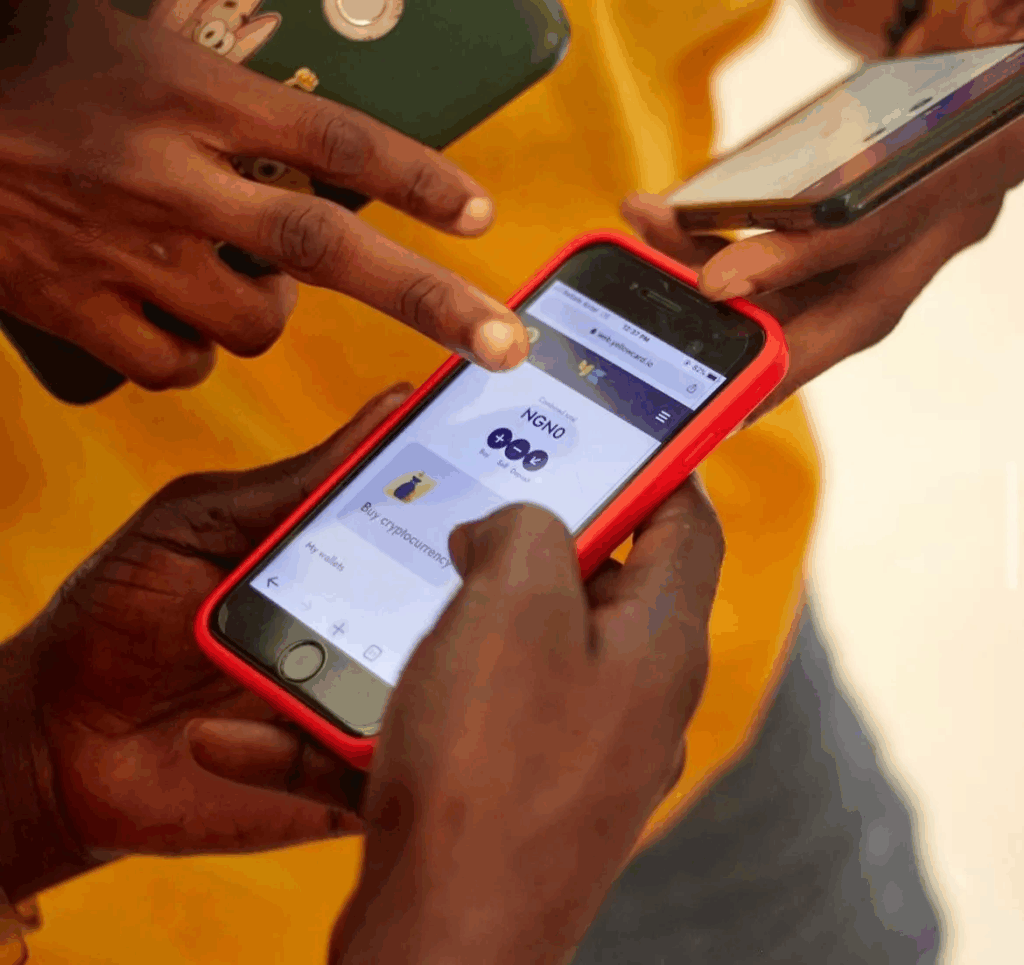
Yellow Card is a mobile-first African crypto platform that’s growing quickly. Unlike a traditional orderbook exchange, Yellow Card uses a simple spread model (no fixed trading fees) to let you buy/sell crypto with local currency. It focuses on stablecoins and major coins (BTC, ETH, USDT, USDC).
Depositing ZAR (or other African currencies) works via bank transfer (~1% fee) or mobile money (~2%). Withdrawals to bank or mobile money have small processing fees. The app is extremely simple: enter an amount in rand, and it shows you the crypto amount after their small spread.
Yellow Card stands out for its simplicity and reach. It operates in 20+ African countries (including SA), aiming to be a crypto on-ramp for everyday use. The platform is designed for quick transfers and stablecoin payments. Security features include 2FA and KYC verification.
Note that Yellow Card doesn’t have advanced trading tools (no order book, margin, or futures), but it shines for fiat-to-crypto convenience. Also, Yellow Card raised major funding ($33M Series C), indicating strong backing.
Tip: Yellow Card is ideal if you just want to quickly buy or send stablecoins (like USDT) in rand. It’s very useful for remittances or paying for goods with crypto because you can send stablecoins via cheaper networks (like Stellar or Solana, often with zero transfer fee). If you plan to convert only smaller amounts, its spread model may cost slightly more than an orderbook exchange, so compare rates.
Buy crypto on Yellow Card and pay like a local with stablecoins!
5. OKX
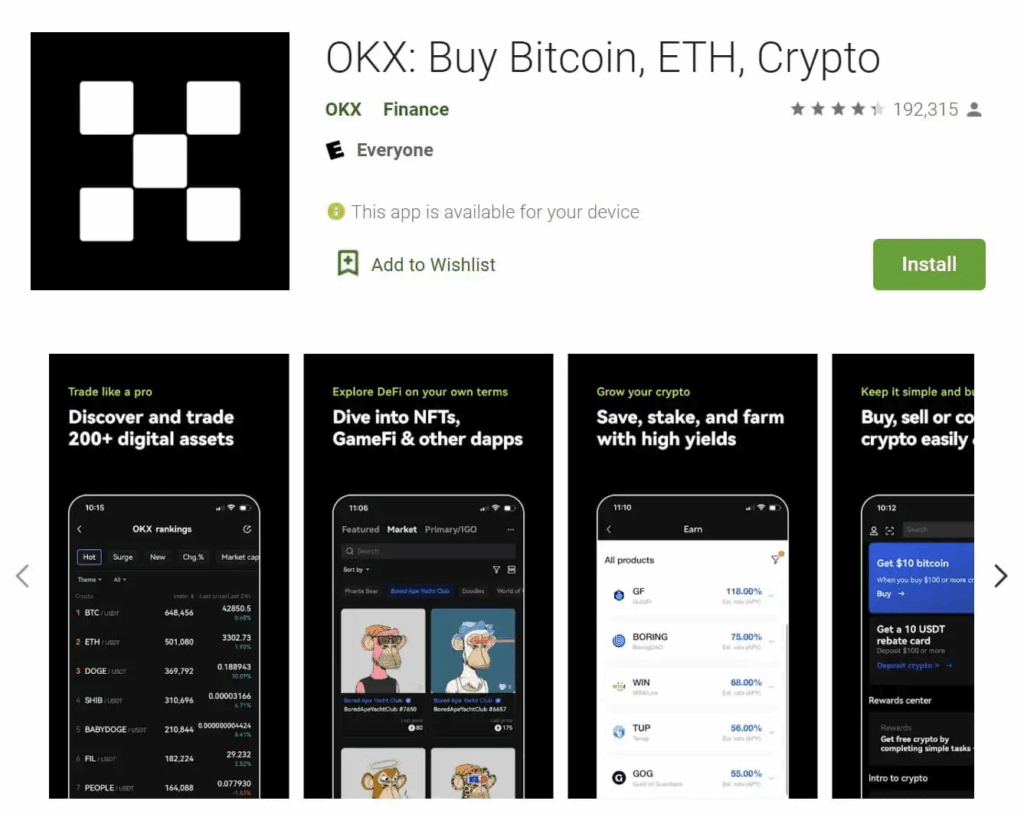
OKX is a global crypto exchange (founded, spot, futures, options, staking, a wallet, you name it. OKX supports 300+ coins with very competitive fees (0.08% maker / 0.10% taker for spot trades). It also uses strong security: 2FA is mandatory for withdrawals and the platform publishes a proof-of-reserves audit to show it covers all user balances. The interface is fairly intuitive for both new and advanced traders, though beginners may find it a bit complex at first.
For South African users, OKX’s main limitation is fiat access: it does not have direct ZAR deposit. You would typically buy crypto on OKX via the P2P marketplace or by transferring stablecoins from a local exchange. Its advantage is giving local traders exposure to a global market and features like high-leverage futures or OKX-specific assets. OKX has acquired some licenses overseas (e.g., Dubai VASP license) but isn’t FSCA-licensed yet. However, it’s considered a legitimate exchange with strong risk management.
Tip: Use OKX if you want advanced tools. To get started, open an OKX account (it’s quick) and deposit some crypto from another wallet. Always finish KYC verification first so you can withdraw without surprise holds. OKX allows both crypto and fiat (via third-party providers) withdrawals, so once verified, you can cash out through partners (though expect extra fees by those providers). As with Binance, small test withdrawals are smart when first using the platform.
Explore OKX for an all-in-one trading experience!
Tips for First-Time Crypto Users
- Start Small: Always begin with a small trade (e.g. R200). This helps you learn order placement and network transfer times without risking much.
- Enable 2FA: Turn on two-factor authentication on your exchange accounts before depositing significant funds. It adds a crucial security layer.
- Use a Wallet: Consider moving crypto to a personal wallet (hardware or software) if you plan to hold long-term. Only keep trading capital on exchanges.
- Check Addresses Carefully: When withdrawing crypto, double-check the wallet address. Crypto transfers are irreversible, so one typo can lose funds.
- Keep Learning: Crypto markets can be volatile. Do your research on any coin before buying, and only invest what you can afford to lose. Exchange tutorials and community forums can be very helpful.
FAQ
Q: Is cryptocurrency legal in South Africa?
A: Yes. South Africa allows crypto trading and considers crypto a financial investment, but not legal tender. The FSCA regulates crypto assets under financial laws. In practice, this means you can legally buy/sell crypto on licensed platforms, and crypto gains are taxable.
Q: How do I withdraw funds from an exchange to my bank?
A: Most South African exchanges let you cash out in rand. For example, on Luno you can enter a withdrawal to your SA bank account and the money arrives in 15-30 minutes if using Standard Bank (instant) or same day via EFT (R20 fee for non-Standard accounts). VALR also supports ZAR withdrawals (first 30/month free). In general, you link your bank account in your exchange profile, request a withdrawal, and after any security holds the funds land in your bank. Always do a small test withdrawal first to confirm.
Q: Which exchange is the safest?
A: Safety depends on both exchange practices and user habits. Licensed, local exchanges are generally considered trustworthy. For instance, Luno is officially registered as a financial services provider, and VALR has also sought FSCA licensing. These exchanges must follow strict security and AML rules. Global giants like Binance and OKX have huge security budgets and insurance funds (Binance’s “SAFU”), but they aren’t locally regulated yet. No matter the exchange, your security practices matter most: enable 2FA, use strong passwords, and withdraw large holdings to your own wallet.
Q: How do I deposit ZAR to these exchanges?
A: Exchanges usually offer EFT bank transfers or instant purchase options. On Luno or VALR, simply navigate to “Deposit ZAR” and follow the instructions to make a standard or instant EFT from your bank (both support most SA banks). Note that instant methods may charge a small fee (1.4% for instant EFT on Luno, free for standard). After depositing, your exchange wallet will show the funds, and you can trade.
Q: What about taxes and regulation? A: Crypto profits in South Africa are taxable. If you make a profit trading crypto, it’s treated as capital gains or trading income, so you should report it. The South African Reserve Bank and FSCA don’t restrict owning crypto, but they also caution against unregulated activity. Always keep records of your trades, as exchanges may report to tax authorities under the new regulations.
Conclusion
Each platform above has its own strengths. For most beginners in 2025, VALR and Luno are top picks due to local support, low fees, and compliance. Binance and OKX are great for advanced trading options, and Yellow Card excels at quick fiat-to-crypto payments. Compare fees and features in the table, choose an exchange that fits your goals, and remember our tips: start small, secure your account, and consider storing your crypto in a personal wallet after buying.
Good luck and happy trading!
Stay Updated
Subscribe to TawkCrypto’s Weekly Roundup to get the latest African crypto news, regulatory updates, and innovation stories delivered straight to your inbox.