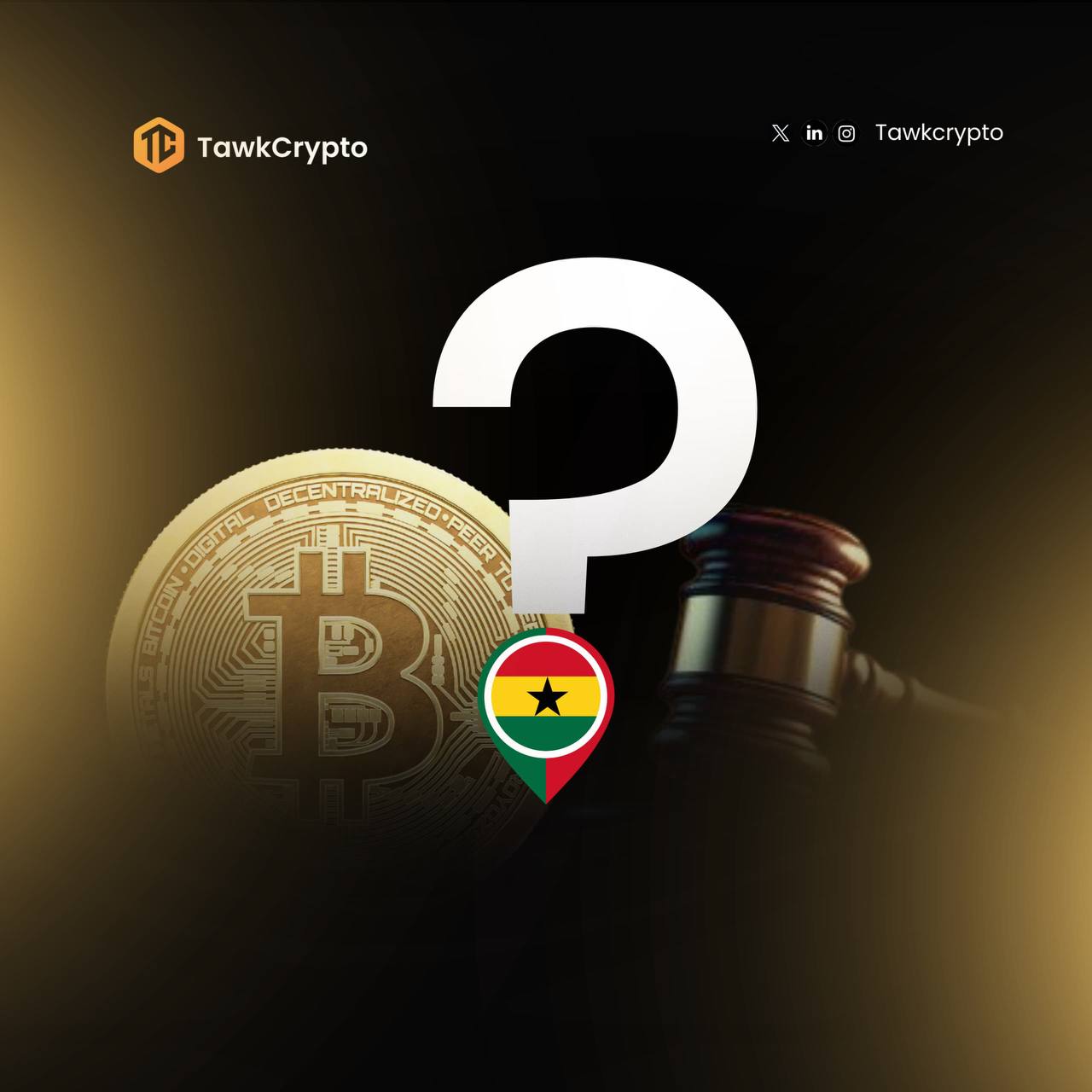
If you’ve been following Ghana’s crypto scene, you probably know it’s been a wild ride from regulatory gray zones to… well, something much more exciting. Let’s break down everything you need to know about crypto’s legal status in Ghana right now.
Yes, Ghana now allows cryptocurrency trading under a regulated framework, but with important caveats.
On December 22, 2025, Ghana’s Parliament passed the groundbreaking Virtual Asset Service Providers (VASP) Bill, 2025, which is now awaiting presidential assent. Bank of Ghana Governor Dr. Johnson Pandit Asiama announced this historic development during the central bank’s annual thanksgiving service, stating clearly: “Virtual asset trading is now legal and no one will be arrested for doing crypto, but we now have the framework to manage the risks involved.”
This comprehensive update explains Ghana’s crypto laws in detail: the key rules of the VASP Act, the roles of regulators, user and business impacts, and comments from local officials and experts. We also look at how this fits into Africa’s broader crypto landscape. Ghana’s move to regulate (rather than ban) crypto is hailed as a pro-innovation approach, but it comes with strict compliance requirements.
Ghana’s New Crypto Law: The VASP Act 2025
Late December 2025 saw the passage of Ghana’s first dedicated crypto law. The VASP Act, 2025 creates a formal legal framework for “virtual assets” and Virtual Asset Service Providers (VASPs). It designates the Bank of Ghana (BoG) and the Securities and Exchange Commission (SEC) as co-regulators.
Going forward, anyone operating a crypto exchange, wallet service, custodian, or other related business must obtain a license from the BoG or SEC before servicing Ghanaian users. The law also imposes strict anti-money laundering (AML) and customer-protection rules: platforms must implement KYC checks and internal controls, follow the FATF “travel rule” for transactions, and maintain solvency protections for customer funds.
In practical terms, unlicensed crypto platforms will be illegal to operate in Ghana, and licensed providers will face audits and penalties if they fail to comply.
Licenses Required: All crypto exchanges and wallet providers must register with the BoG or SEC before offering services. The regulators will issue guidelines on application processes, capital reserves, and consumer-protection standards.
Joint Oversight: The Bank of Ghana leads overall supervision of the crypto sector, while the SEC shares oversight (especially of securities-like tokens). Both agencies have pledged a “safe, transparent and innovative virtual asset ecosystem”.
AML/KYC Rules: The law enforces global AML standards. VASPs must verify customer identities and report suspicious flows, helping authorities trace cross-border remittances. Ghana’s move explicitly aims to curb fraud, pump-and-dump scams, and other crimes by bringing crypto “within clear, accountable, and well-governed boundaries”.
Importantly, the VASP Act does not make crypto a currency, Ghana’s own currency, the cedi, remains the only legal tender. The Act only regulates crypto transactions and services. In other words, you can legally buy, sell, and hold cryptocurrencies in Ghana now, but businesses are not required to accept them as payment by law.
Why Change Course? Ghana’s Crypto Adoption
Ghana’s crypto story is one of evolution, not revolution. Let’s look at how we got here:
2018: The Cautious Beginning
Back in January 2018, the Bank of Ghana issued its first public notice, clarifying that cryptocurrencies weren’t licensed under the Payments System Act. The message was clear: crypto wasn’t recognized as legal tender, and people should proceed with caution. Commercial banks were even instructed to avoid facilitating crypto transactions.
2022: Maintaining Distance
The central bank doubled down with another notice in March 2022, again warning that cryptocurrencies remained unregulated and users traded at their own risk. At this point, Ghana was still keeping crypto at arm’s length.
2024-2025: The Regulatory Shift
By August 2024, the Bank of Ghana couldn’t ignore the elephant in the room any longer. Governor Asiama himself admitted: “Crypto is a big thing in Ghana. We can pretend to look the other way, but the reality is that it’s happening.”
The central bank released draft guidelines and announced plans for a comprehensive regulatory framework. In July 2025, they conducted a baseline registration to map out the entire VASP sector. And by December 2025, the VASP Bill had passed Parliament.
According to central bank estimates, approximately 3 million Ghanaians (about 17% of the adult population) are already using cryptocurrencies. That’s a massive community that’s now operating with legal clarity and protection.
The Regulatory Framework: What You Need to Know
Dual Oversight Model
Ghana is implementing a sophisticated dual-regulator approach:
- Bank of Ghana (BoG): Primary regulator for payment-related crypto activities, exchanges, and VASPs
- Securities and Exchange Commission (SEC): Joint oversight for securities-like crypto activities and token offerings
Under the new regime, Bank of Ghana is the primary crypto regulator. It will license and supervise VASPs including exchanges, custodians, payment gateways and wallet providers. The BoG will issue implementation rules through 2026, detailing capital requirements, reporting standards, and risk controls.
The SEC (Securities and Exchange Commission) also has joint oversight, especially over token offerings that look like securities. Both bodies have repeatedly stated their commitment to responsible crypto innovation. For example, the BoG said the new law is designed to “encourage responsible innovation in digital finance while safeguarding users and preserving the stability” of Ghana’s financial system.
Other agencies also play parts: the Ghana Revenue Authority will soon clarify how crypto gains are taxed under the law, and the Ministry of Finance will likely issue policy updates. In sum, Ghana now has a multi-agency framework: BoG and SEC handle licenses and supervision, while tax authorities track profits.
This dual model is based on an activity-based approach rather than entity-based. That means each specific activity your business engages in will require separate licensing, you’re licensing activities, not just getting a blanket approval for your entity.
14 Distinct Activities
Dr. Seyram Pearl Kumah, Lead for Virtual Assets Regulation at the Bank of Ghana, revealed that the Act identifies 14 distinct virtual asset services, each requiring either registration or licensing depending on the risk level involved.
Key Compliance Requirements
Here’s what VASPs need to prepare for:
1. Anti-Money Laundering (AML) Compliance
- The VASP Act is built on Act 1044, the Anti-Money Laundering Act
- All VASPs must comply with existing AML laws and guidelines
- Enhanced due diligence for high-risk transactions
2. Know Your Customer (KYC)
- Mandatory identity verification for all users
- Record-keeping requirements
- Customer due diligence procedures
3. Financial Action Task Force (FATF) Standards
- Implementation of the Travel Rule
- Cross-border transaction monitoring
- Information sharing protocols
4. Reporting and Transparency
- Regular reporting to regulators
- Transaction monitoring systems
- Suspicious activity reporting
5. Consumer Protection
- Cybersecurity standards
- Capital requirements
- Custody safeguards
Tax Implications
The Ghana Revenue Authority will handle taxation of virtual assets under provisions in the Act. While specific tax rates haven’t been finalized, VASPs should expect:
- Requirements to report user income and transactions
- Tax obligations on crypto-related gains
- Possible taxation of crypto-to-crypto transactions
Broader Crypto Landscape in Ghana
Ghana’s VASP Act makes it one of the first Sub-Saharan countries to fully legalize and regulate crypto trading. It follows similar moves in Nigeria (where a stricter ban on banks in 2021 was softened with new rules) and Kenya (which legalized crypto in late 2025). Bloomberg notes Ghana’s law “legalizes widespread use of cryptocurrency” to address a fast-growing market. The move is seen as part of Africa’s trend: governments are acknowledging crypto’s reality (especially for remittances and financial inclusion) and choosing regulation over prohibition.
Ghana has also announced even bigger ambitions: in 2026, the central bank will explore issuing gold-backed stablecoins, leveraging Ghana’s large gold reserves. The idea is to use blockchain to make cross-border payments cheaper and faster, potentially turning Ghana into a hub for commodity-backed digital assets. If realized, this could boost trade and remittances (for example with other West African nations). It shows that Ghana isn’t just legalizing crypto; it’s actively looking to innovate with it.
Risks and Considerations
While regulation brings benefits, Ghanaian crypto users should stay cautious. Market volatility and potential scams still exist. Regulators themselves warn about common crypto schemes (pump-and-dumps, unlicensed promotions) and advise investors to do their homework. Also, compliance costs for firms could slow some services or drive them to bigger markets. And as Governor Asiama noted, enforcement across global borders is challenging – if an exchange abroad serves Ghanaians without license, Ghana’s regulators have limited reach.
Another key point: this law doesn’t change how the cedi is managed. In fact, part of Ghana’s motivation was protecting the cedi. Heavy, unmonitored crypto usage risked destabilizing the currency. The new framework aims to keep crypto growth from undermining monetary policy.
The Bottom Line for Ghana
In summary, Ghana has embraced crypto trading but under strict control. For anyone wondering “Can I trade Bitcoin in Ghana?”, the answer is yes, as of 2026, within a regulated market. Casual traders and remittance users will likely appreciate the clarity and protections. Local crypto businesses may need to adapt rapidly to licensing requirements, but the long-term effect should be more transparency and legitimacy.
This pragmatic approach, “regulate, don’t prohibit”, is in line with a growing African trend. Ghana’s regulators and even crypto entrepreneurs see promise in Bitcoin and blockchain to boost finance for ordinary people. As Governor Asiama put it, these new rules are enablers, not blockers, of innovation. By formalizing the sector, Ghana hopes to unlock investment and reduce costs (for example, by lowering remittance fees) while keeping financial stability.
So yes, crypto is legal to use in Ghana now – just follow the new rules. With the VASP Act 2025 in force, Ghana offers a clear (if controlled) environment for digital assets. The country has struck a balance: recognizing crypto’s benefits (financial inclusion, fintech growth) while aiming to shield consumers and the currency from harm. For crypto users, that means trading with confidence and knowing the regulators have set the guardrails.