
When we talk about cryptocurrency adoption in Africa, the conversation typically centers on challenging traditional banks and financial institutions. Nigeria ranks second globally in grassroots crypto adoption. Kenya, Ghana, and South Africa aren’t far behind. Between July 2024 and June 2025, Sub-Saharan Africa received over $205 billion in on-chain value, representing a 52% increase from the previous year. These numbers paint a compelling picture of a continent embracing digital finance.
But here’s the uncomfortable truth: crypto’s real competitor in Africa isn’t the banking system. It’s the physical cash that 72% of South Africans still use at point-of-sale, the banknotes circulating to the tune of $60 billion in Algeria alone, and the tangible money that powers an informal economy representing 50-65% of GDP in countries like Benin, Tanzania, and Nigeria.
Let’s explain why cash remains king, and why understanding this reality is crucial for anyone serious about crypto’s future on the continent.
The Behavioral Economics of Touch and Trust
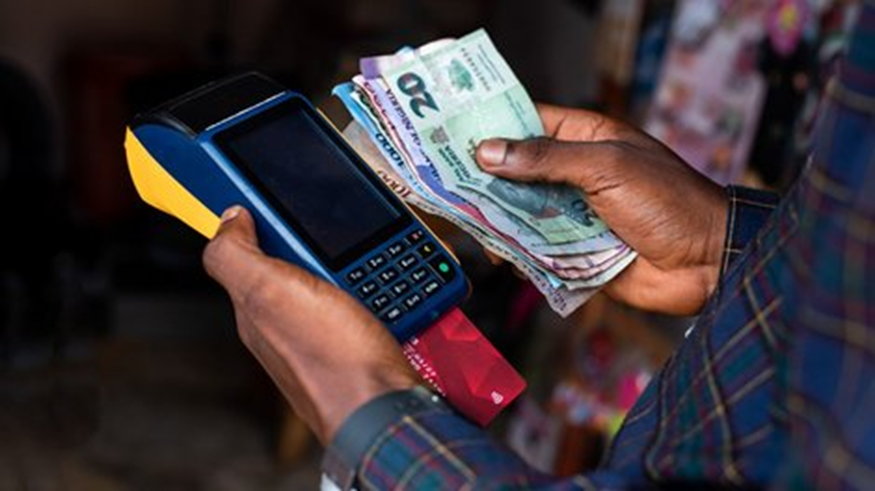
There’s a reason why cash has survived every technological revolution thrown at it. It’s not nostalgia or ignorance, it’s deeply rooted in human psychology and economic behavior.
In Africa’s informal economy, which employs 85% of Sub-Saharan Africa’s workforce, transactions happen face-to-face. A street vendor in Lagos, a market trader in Nairobi, or a taxi driver in Johannesburg conducts hundreds of micro-transactions daily. Each one requires immediate confirmation, zero technical barriers, and universal acceptance.
Cash provides something crypto can’t easily replicate: tangibility without technology. You can count it, feel it, verify it instantly, and most importantly, use it without electricity, internet, or smartphone literacy. When 26% of Sub-Saharan Africans lack access to clean drinking water and nearly half have no electricity, expecting them to adopt crypto for daily transactions isn’t just optimistic, it’s tone-deaf.
Consider the behavioral economics at play. Studies on consumer psychology reveal that people perceive physical transactions differently from digital ones. The physical act of handing over cash creates a psychological “pain of paying” that helps regulate spending. Digital transactions, whether via card, mobile money, or crypto, reduce this friction, which sounds positive until you realize that for low-income households operating on razor-thin margins, that psychological check matters.
The Infrastructure Reality Nobody Wants to Discuss
Here’s where the crypto-enthusiast narrative typically breaks down. Yes, Africa processed 81.8 billion mobile money transactions worth $1.1 trillion in 2024, an impressive 15% increase from 2023. Mobile money has become the continent’s financial infrastructure success story, with Kenya leading the charge where over 90% of households have at least one mobile wallet.
But mobile money succeeds precisely because it solves the problems crypto creates.
M-Pesa in Kenya doesn’t require you to understand blockchain technology, private keys, or wallet addresses. It doesn’t fluctuate wildly in value. Most critically, it offers immediate local liquidity, you can cash out instantly at any of thousands of agents nationwide. This isn’t a small detail; it’s everything.
The liquidity challenge for crypto in Africa is brutal. Want to cash out less than $1,000 worth of crypto? You’ll probably manage. Need to convert $10,000? Good luck.
M-Pesa transactions in Kenya are capped at approximately $1,400 per transaction and $2,800 per day. Bank transfers exceeding $10,000 trigger regulatory scrutiny, and if the bank suspects crypto involvement, your account could be shuttered.
This isn’t theoretical, it’s why peer-to-peer exchanges dominate African crypto trading and why users face significant challenges converting digital assets to usable local currency. Between October 2021 and October 2022, South Africans traded $118 million in crypto on P2P platforms, impressive until you realize this represents the workaround for an infrastructure gap, not a feature.
The Trust Paradox
Africa’s crypto adoption is often framed as a response to distrust in traditional financial institutions. And there’s truth to this, when Nigeria’s inflation hit 32.15% in August 2024 and currencies across the continent face continuous devaluation, Bitcoin as “digital gold” makes conceptual sense.
But here’s the paradox: while people may distrust banks and governments, they still trust what they can physically control. Cash represents autonomy in a way that crypto, despite its decentralization ethos, struggles to match.
In communities where 83% of employment is informal and many workers earn daily wages, the ability to physically hold and immediately spend earnings isn’t a preference, it’s survival economics. When a day laborer in Accra finishes work at 6 PM, they need to buy dinner for their family by 7 PM. The transaction path is: receive cash, walk to market, buy food. There’s no volatility risk, no transaction confirmation wait time, no need to find someone who accepts crypto or explain how to convert it.
The trust issue cuts deeper when you examine crypto’s liquidity problems in Africa. Users on peer-to-peer platforms face price discrepancies, volatility risks during conversion, and the ever-present threat of scams, all of which make cash’s simplicity look increasingly attractive.
Cultural Money Practices That Pre-Date Digital Everything
Africa has sophisticated informal financial systems that have existed for generations. Rotating Savings and Credit Associations (ROSCAs), community lending circles, and social savings groups are deeply embedded in how communities manage money. These systems operate on trust, physical presence, and, critically, cash.
In Sub-Saharan Africa, 52% of adults save in some way, but the methods are diverse. While 44% now use accounts for saving (a first-time majority), that still means more than half rely on alternative methods including saving at home or through community groups. These traditional systems aren’t waiting for disruption by crypto, they’re working precisely because they align with how communities actually function.
Consider this: when a community savings group meets monthly and each member contributes their share, the transaction is immediate, verified by the group, and recorded in a physical ledger everyone can see. Converting this to crypto introduces complexity without proportional benefit. You’d need every member to have a smartphone, understand wallet management, deal with gas fees, and trust technology over face-to-face verification.
The ROSCAs model, which remains popular across the continent, reveals an essential truth: the innovation isn’t always in the technology; sometimes it’s in the social structure. These groups don’t need blockchain to ensure trust, they have community accountability, which has worked for decades.
Why Mobile Money Succeeded Where Crypto Struggles
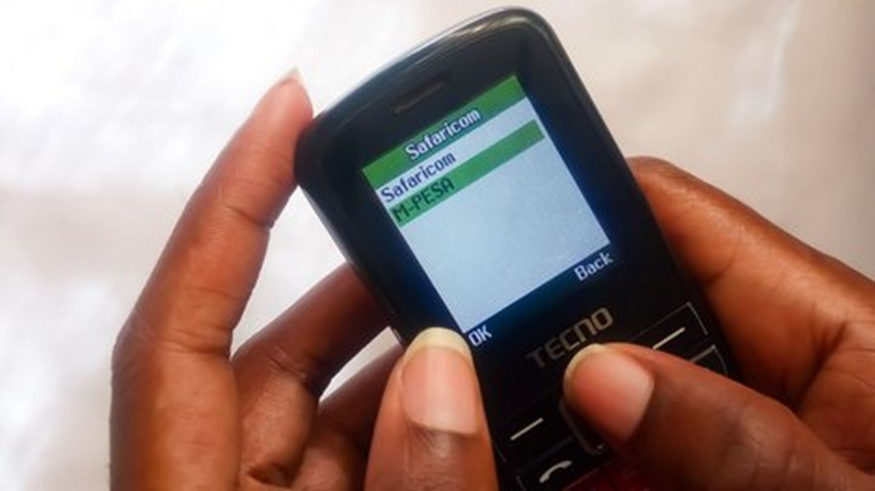
The comparison between mobile money and cryptocurrency is instructive. By the end of 2024, Africa had 1.1 billion registered mobile money accounts, 53% of the global total. East Africa alone processed $649 billion in transactions. This success wasn’t accidental; it came from solving real problems with appropriate technology.
Mobile money succeeded because it:
- Operated through existing mobile networks already providing voice services
- Required only basic feature phones, not smartphones
- Linked directly to local currency without volatility
- Created extensive agent networks for cash-in/cash-out
- Partnered with regulatory authorities rather than opposing them
- Solved for the unbanked without requiring financial literacy overhaul
Cryptocurrency, by contrast, demands:
- Smartphone ownership (not universal across the continent)
- Internet connectivity (often unreliable or expensive)
- Technical understanding of wallets, keys, and blockchain concepts
- Tolerance for price volatility (difficult for those living paycheck to paycheck)
- Complex on-ramps and off-ramps (the liquidity problem persists)
- Navigation of uncertain and often hostile regulatory environments
The difference isn’t that Africans can’t handle crypto’s complexity, it’s that mobile money solved their problems more elegantly.
The Stablecoin Promise and Its Limitations
Stablecoins have emerged as crypto’s answer to volatility concerns. In Nigeria, stablecoins represented nearly $3 billion in transactions during Q1 2024, making them the largest portion of sub-$1 million transactions. This shift from Bitcoin to stablecoins acknowledges what everyone already knew: people need price stability for everyday transactions.
But stablecoins still face the fundamental liquidity challenge. Having USDT in your wallet is great until you need to buy bread from a local vendor who’s never heard of Tether. The conversion path, USDT to local exchange, exchange to P2P trader, trader to bank transfer or mobile money, finally to cash, adds friction at every step. Meanwhile, cash remains cash, instantly accepted everywhere.
The infrastructure for stablecoin liquidity simply doesn’t exist at scale in most African markets. Yes, companies like Yellow Card are working on it. Yes, regulatory frameworks are slowly emerging. But we’re years, possibly decades, away from stablecoins achieving the universal acceptance that cash enjoys today.
Building Infrastructure That Meets People Where They Are
For crypto to genuinely challenge cash dominance, the industry needs to:
- Solve the liquidity problem: Until someone in rural Ghana can convert crypto to cash as easily as withdrawing from an ATM, mass adoption will remain elusive. This requires massive investment in agent networks, regulatory cooperation, and local partnerships.
- Simplify user experience dramatically: If your grandmother can’t use it, it won’t achieve mass adoption. The technology must become as invisible as mobile money became. QR codes, user-friendly apps, and education programs aren’t enough when your competitor is physical cash.
- Build trust through transparency: The crypto space in Africa has seen numerous scams, exit liquidity traps, and failed projects. Each one reinforces why people prefer cash’s tangible reliability.
- Partner with, not against, regulators: Mobile money succeeded partly because operators worked within regulatory frameworks. Crypto’s libertarian ethos often puts it at odds with governments, creating uncertainty that cash doesn’t have.
- Accept that cash will remain dominant: The informal sector that employs 85% of workers isn’t going digital overnight. The realistic goal isn’t replacement but complementarity.
Africa’s crypto story is compelling, nuanced, and often oversimplified by both enthusiasts and skeptics. The continent isn’t a monolith, Nigeria’s crypto landscape differs dramatically from Mauritius, which differs from Ethiopia. But across this diversity, one constant remains: cash dominates daily economic life in ways that cryptocurrency currently cannot match.
The behavioral economics of touch and trust, the infrastructure realities of liquidity and access, and the cultural practices of community-based finance all favor cash’s continued dominance. Add to this the success of mobile money, which provides digital convenience without crypto’s volatility and complexity, and the challenge becomes clearer.
This isn’t a failure of African populations to “get” crypto or embrace innovation. East Africa pioneered mobile money before most of the world. Africa processes more mobile money transactions than any other continent. Africans are highly innovative with financial technology when it solves real problems appropriately.
The issue is that crypto, in its current form, creates problems for the average African user that cash doesn’t have. It’s volatile when people need stability. It’s complex when people need simplicity. It requires infrastructure that doesn’t exist when people need solutions now.
Until crypto addresses these fundamental challenges, particularly the liquidity crisis that makes cashing out difficult and expensive, physical money will remain king. Banks might be the theoretical enemy, but cash is the practical competitor. And right now, cash is winning.
The sooner the crypto industry accepts this reality and builds solutions that acknowledge rather than dismiss it, the sooner cryptocurrency can find its authentic, sustainable place in Africa’s diverse and dynamic economic landscape. That place will be important, but it won’t be replacing the cash in people’s pockets anytime soon.
Read also: How to Buy Bitcoin in Nigeria: Complete Guide for Beginners (2026)