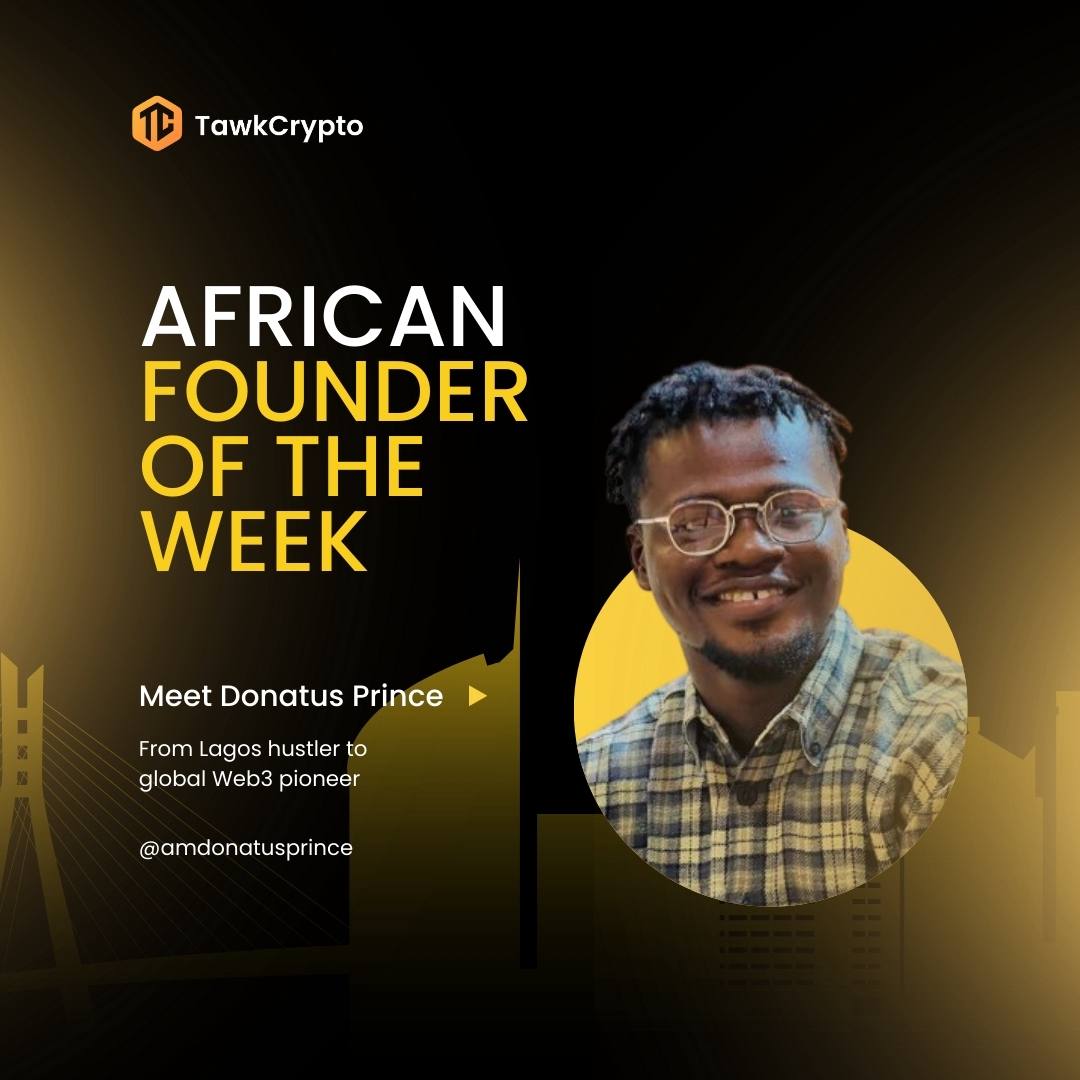
From Lagos Hustle to Global Stage: Meet the Nigerian Building Solana’s Loyalty Revolution
Imagine if your loyalty points from buying suya in Lagos, or that tasting of Kilishi in Abuja could work the same way as your points from shopping at Shoprite, but this time, you actually own them, they can’t disappear, you cant loose them while walking down the isle like a paper voucher, and you can even trade them like crypto. That’s exactly what Donatus Prince is building with Verxio Protocol.
Every African knows the hustle. From selling recharge cards in secondary school to flipping products online, we’ve all had that entrepreneurial fire. But Donatus Prince took his hustle global, and he’s now revolutionizing how loyalty programs work worldwide, straight from Nigeria.
The Journey: From Begging for a Spot to Pitching in Singapore
Donatus didn’t start with millions in funding or connections in Silicon Valley. In early 2024, this computer engineering graduate was literally begging for a slot at the Lagos Hacker Hostel. You know that feeling when you’re trying to get into an exclusive WhatsApp group or event? That was Donatus, hungry to learn and build in the Web3 space.
But here’s where the story gets inspiring. Within just one year, this same guy who was pleading for hostel space went from:
Lagos Hacker Hostel → Grinding with fellow developers, learning the ropes
Solana Apex, Cape Town → Networking with global blockchain founders
Ignition 3, Singapore → Pitching to top-tier international investors
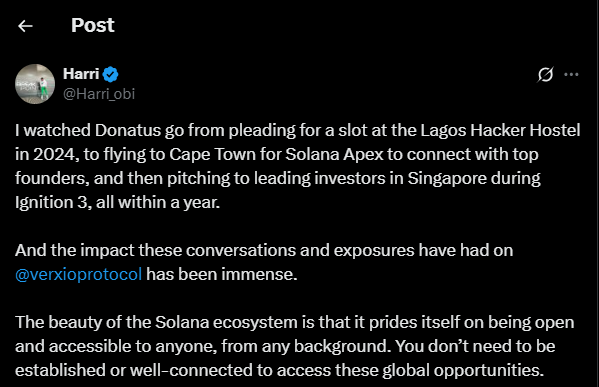
As Harri Obi, SuperteamNG co lead perfectly captured it:
“I watched Donatus go from pleading for a slot at the Lagos Hacker Hostel in 2024, to flying to Cape Town for Solana Apex to connect with top founders, and then pitching to leading investors in Singapore during Ignition 3, all within a year.”
That’s the kind of acceleration that makes you believe in the power of consistent hustle and the right ecosystem.
What Exactly is Verxio? (In Simple Terms)
You know how your bank gives you points when you use their debit card, or how Jumia gives you JPoints when you shop? But then these points just sit there, you can’t transfer them to your friend, and sometimes they even expire without warning?
Verxio flips this script completely. Think of it as turning every loyalty program into something like Bitcoin, but for rewards. Here’s how it works:
Instead of getting points stored in some company’s database that you can’t verify, Verxio gives you an NFT loyalty card. This digital card lives in your crypto wallet and contains all your points, tier level, and rewards. Because it’s on the blockchain (specifically Solana), you actually own it.
When you buy airtime from an app using Verxio, or pay bills through a Verxio-integrated platform, your points get automatically added to your NFT card. Want to check your points? Just look at your wallet, everything is transparent and verifiable.
Real-World Magic: How Nigerians Are Already Using This
Let’s talk about Airbills Pay, Verxio’s first major success story. This is a Nigerian fintech app that lets you pay bills with crypto. But here’s the twist: every time you pay your NEPA bill or buy airtime through Airbills, you earn USDC cashback automatically added to your Verxio loyalty NFT.
Imagine paying your ₦50,000 monthly bills and earning actual USDC that you can:
Use to pay next month’s bills
Send to your cousin in Ghana
Trade on Binance
Hold as savings against naira inflation
That’s not theoretical, it’s happening right now.
The Numbers Don’t Lie
Since launching, Verxio has achieved some impressive milestones:
21+ active loyalty programs already running
2,000+ NFT loyalty passes minted
300,000+ reward points distributed
Partners include gaming projects, DeFi protocols, and fintech apps across Africa
To put this in perspective: in less than a year, Verxio has gone from idea to powering loyalty programs for dozens of projects. That’s faster growth than most startups see in their first three years.
The Community That Built a Founder
One thing that stands out about Donatus is how he constantly credits his community. He calls SuperteamNG (Solana’s Nigerian community) “the reason I am where I am today.” This isn’t just humility, it’s recognition of how African tech communities work.
We build together. We share opportunities. We celebrate each other’s wins. Donatus trained hundreds of developers through SuperteamNG and Microsoft-backed programs, and now he’s using that same collaborative spirit to grow Verxio.
He’s also mentoring the next generation, helping dozens of African startups win grants and build on Solana..
The Bigger Picture
Donatus often talks about loyalty points as “putting money into a pot that resists even the hottest fire” meaning your rewards are protected against inflation and can’t be arbitrarily taken away.
This resonates deeply in Nigeria, where we’ve seen bank charges eat into savings and loyalty points disappear overnight. With Verxio, your rewards are as secure as Bitcoin itself.
The protocol is already expanding beyond Solana to other blockchains, positioning itself as the universal loyalty layer for Web3. But more importantly, it’s proving that African developers can build infrastructure that the entire world uses.
The Bottom Line
Donatus Prince’s story is bigger than just one successful startup. It’s proof that:
African developers can compete globally when given the right opportunities
Local insights can create universal solutions
The hustle mentality, combined with solid engineering, can reshape entire industries
Community support accelerates individual success
When asked about the challenges of building a startup, Donatus smiles and says:
“I face those challenges on a regular basis… I cannot stop. I actually love it. It makes me feel alive.”
That’s the energy driving not just Verxio, but the entire African Web3 movement. One loyalty program, one NFT, one satisfied customer at a time, we’re building the future of finance.
The next time you earn points buying something, ask yourself: do you really own those rewards?
With builders like Donatus leading the charge, soon the answer will always be yes.